Bringing Two Surf Skis Back from the Dead (Maybe)
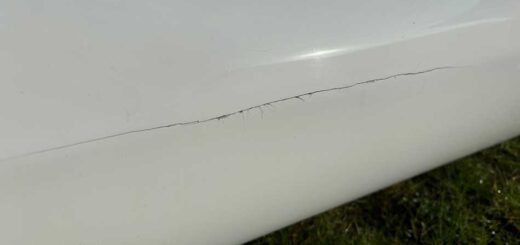
For the last few years I’ve been the proud owner of not one, but two damaged surf skis: a Knysna Genius BLU and a Think Evo II. I essentially snapped the tail off the former back in 2019 and it’s been sitting under my lean-to ever since. No longer seaworthy, it was eventually superseded by the Think Evo II. Unfortunately, in 2023 I managed to break that one too, leaving a long split along the seam in the bow.
Both had suffered structural damage. Both had reached the point where they were effectively unusable. And after speaking to several professional repairers, the general consensus seemed to be that they weren’t really worth repairing. Not impossible, perhaps, but difficult enough and expensive enough that the economics simply didn’t stack up, and no one was willing to take the repairs on. There was also a fair chance that any repair might not hold up in the long term.
Needless to say, I haven’t been surf-skiing since.
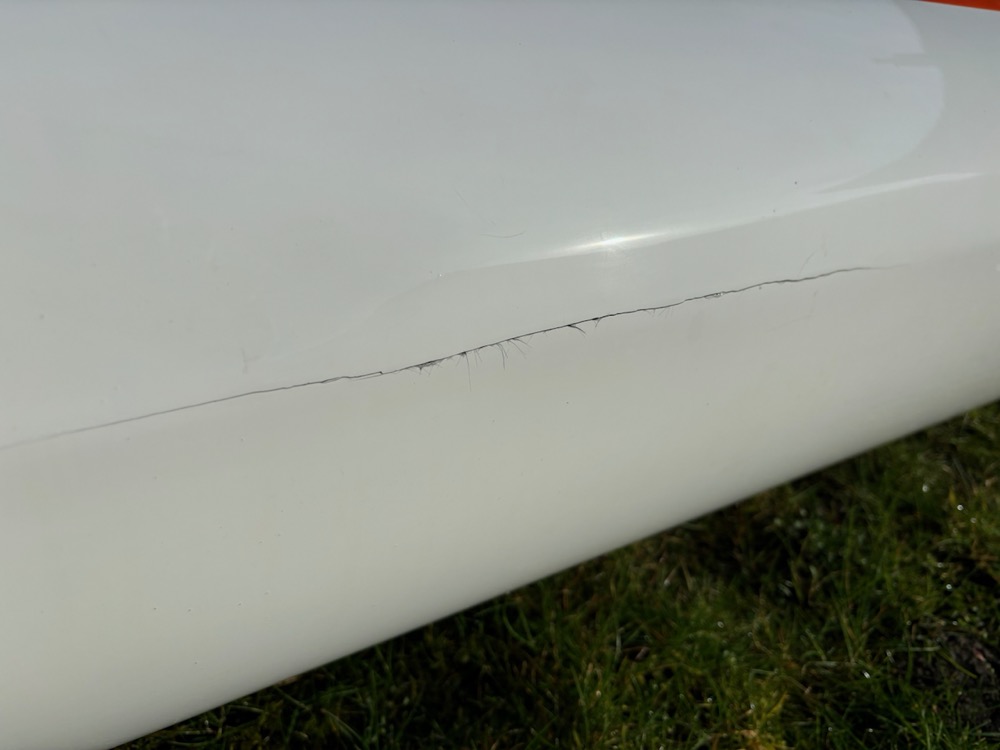
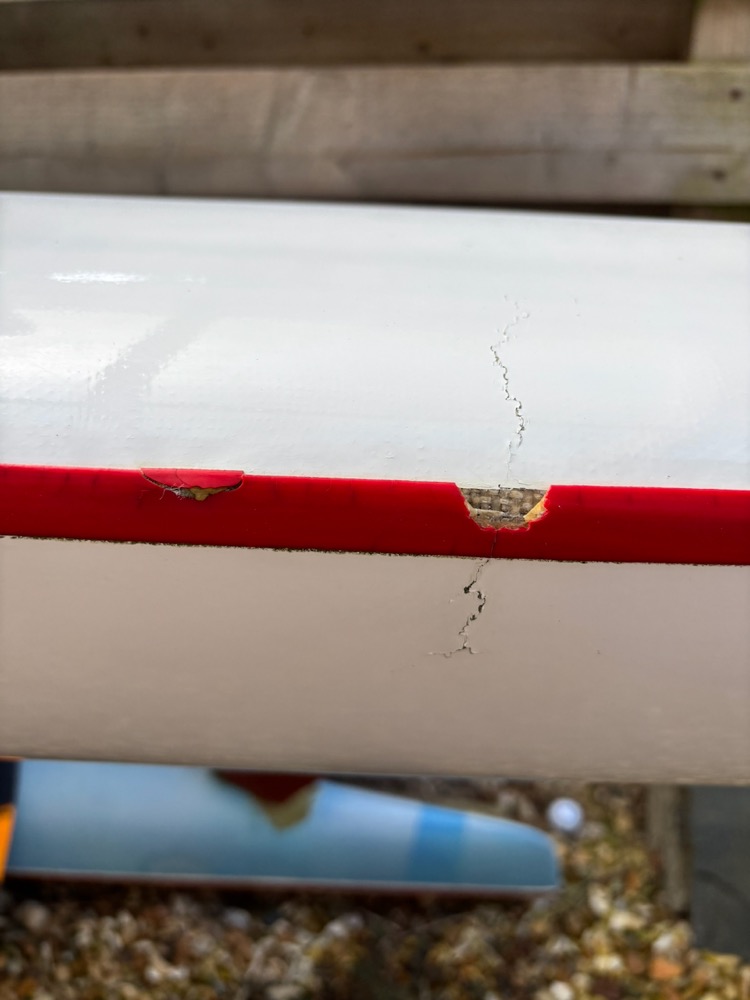
So they sat there. Every now and then, I’d look at them and think it was a shame. I’d usually wash the sand and grime off them a couple of times a year and wonder what their fate would be. They were good boats and, despite the damage, most of each ski was perfectly serviceable. Of course, surf skis always look sleek, fast and tempting to get back on the water. But there they remained, taking up space and gathering dust.
Recently I decided I had very little to lose by trying to repair them myself. A few repair kits, some glass cloth, epoxy resin and various bits and pieces came to around £70. If I failed, I’d still have two broken surf skis. If I succeeded, I’d have two boats back on the water. Considering a replacement ski would cost several thousand pounds, it seemed worth a try.
The Think Evo II
The Think was first.
As with most DIY projects, I began by convincing myself that I didn’t need to spend hours watching videos and reading forum discussions before making a start. The internet is very good at making things look complicated, so why not just get some scruffy clothes on and make it up as I went along?
The first task was to sand back the damaged area, clean it properly and assess the damage. The crack was quite long, probably about half a metre, and had robbed the bow of much of its structural integrity. Even light pressure on the deck would cause the sides to bulge out and the split to open.
I cut it back, opened the crack up slightly and then squeegeed resin into the gap to try and bond it back together. I had to manipulate the deck and hull back into position and strap everything up with roof-rack straps to hold it in place while it cured.
This is the bit I’m not very good at: waiting, trying not to touch it every ten minutes while wondering whether it’s curing properly. The following morning everything seemed OK. The bow felt much stiffer and the crack appeared to have sealed and bonded successfully.
Next came some reinforcement in the form of a strip of glass cloth, more resin and, inevitably, more waiting. By the following day it was feeling fairly solid. It should be watertight and it certainly feels quite strong. I’ve sanded it back a little and tidied things up, but I was aiming for a functional repair rather than a cosmetic masterpiece, so I haven’t bothered chasing a perfect finish.
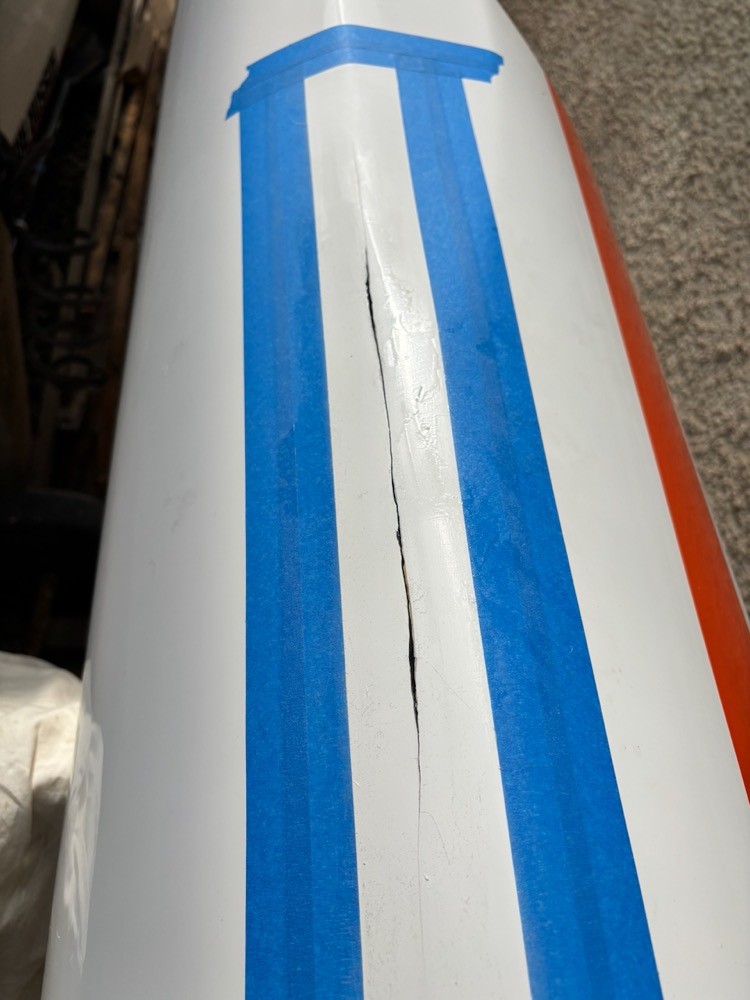
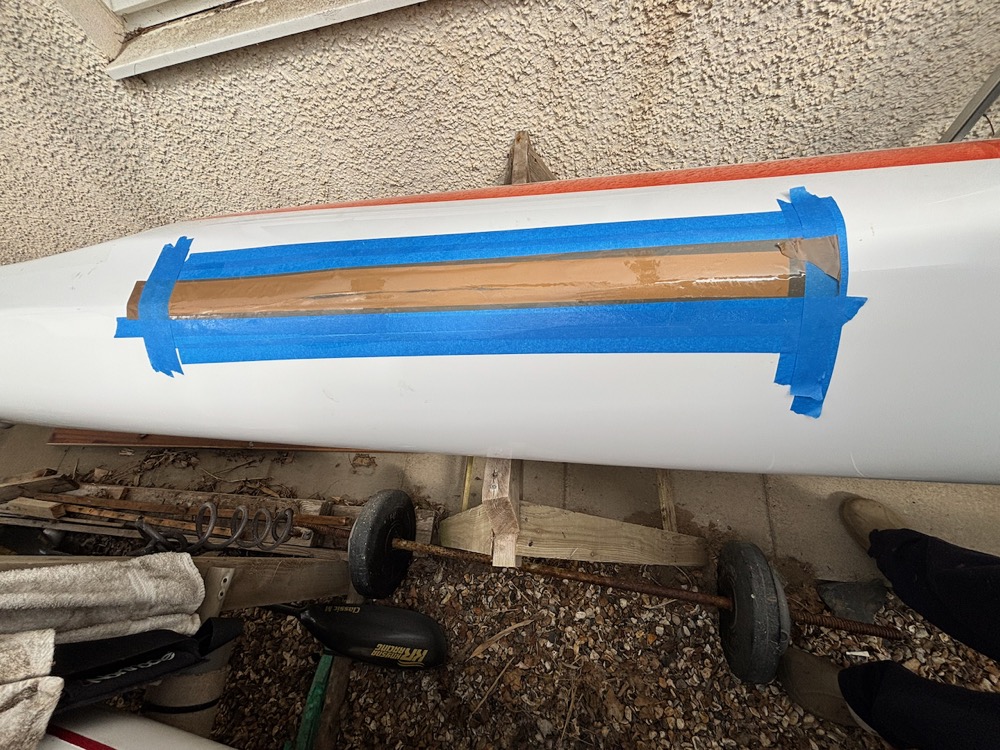
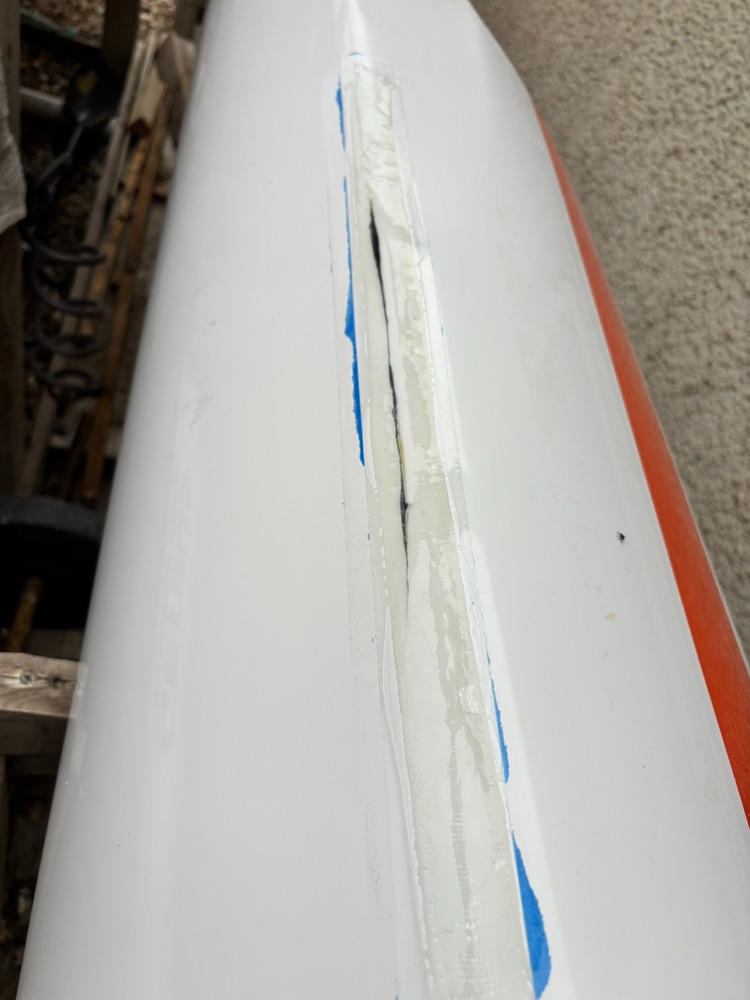
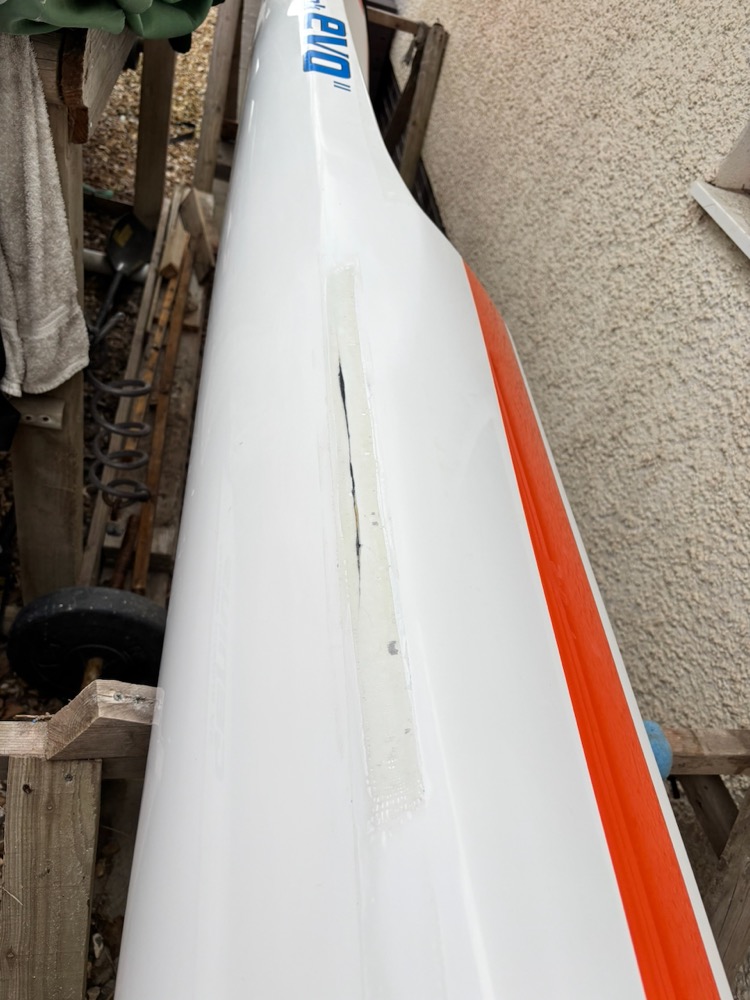
I’ll probably leave the repair exposed rather than painting or gel-coating it. Maybe a strategically placed sticker will cover it up one day.
The Knysna Genius BLU
The Knysna was always going to be the bigger challenge.
Part of the deck-to-hull seam had separated and there were cracks around the damaged area that almost wrapped around the entire stern. It wouldn’t take much to snap the back few feet clean off the ski.
After spending enough time looking at it, though, the solution seemed reasonably straightforward. First seal the seam, then reinforce the area and patch the cracks.
I haven’t finished this repair yet, but I did tackle the seam the other day. After cleaning everything out, I squeezed resin into the gap and then strapped the boat up to pull everything back together and hold it in place while it cured.
The following morning it seemed to have held.
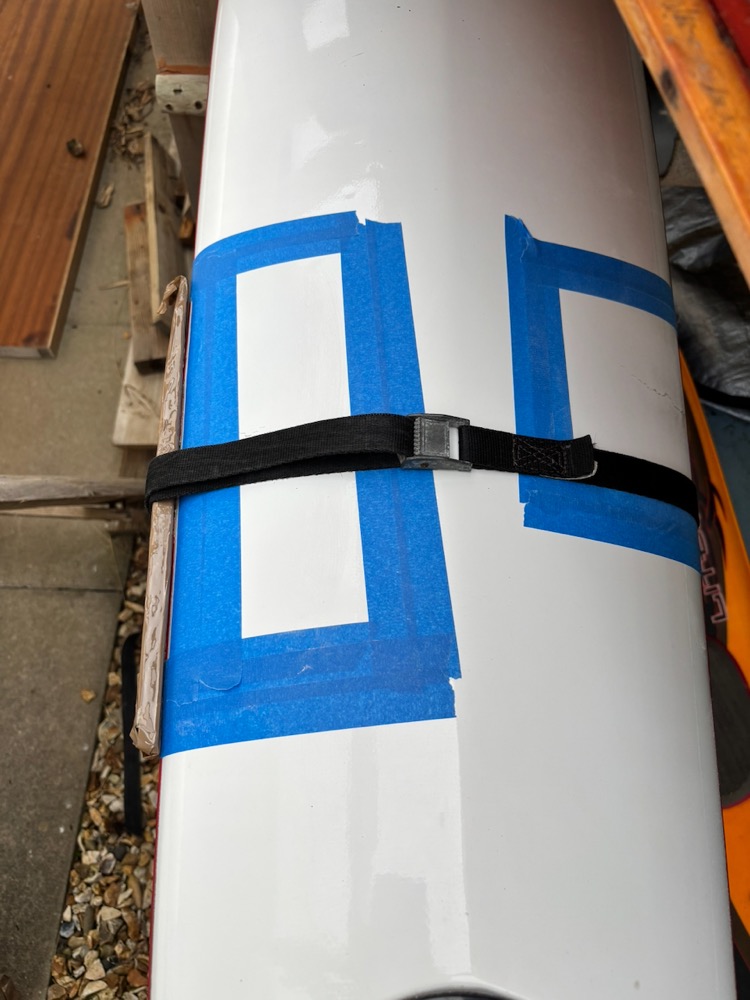
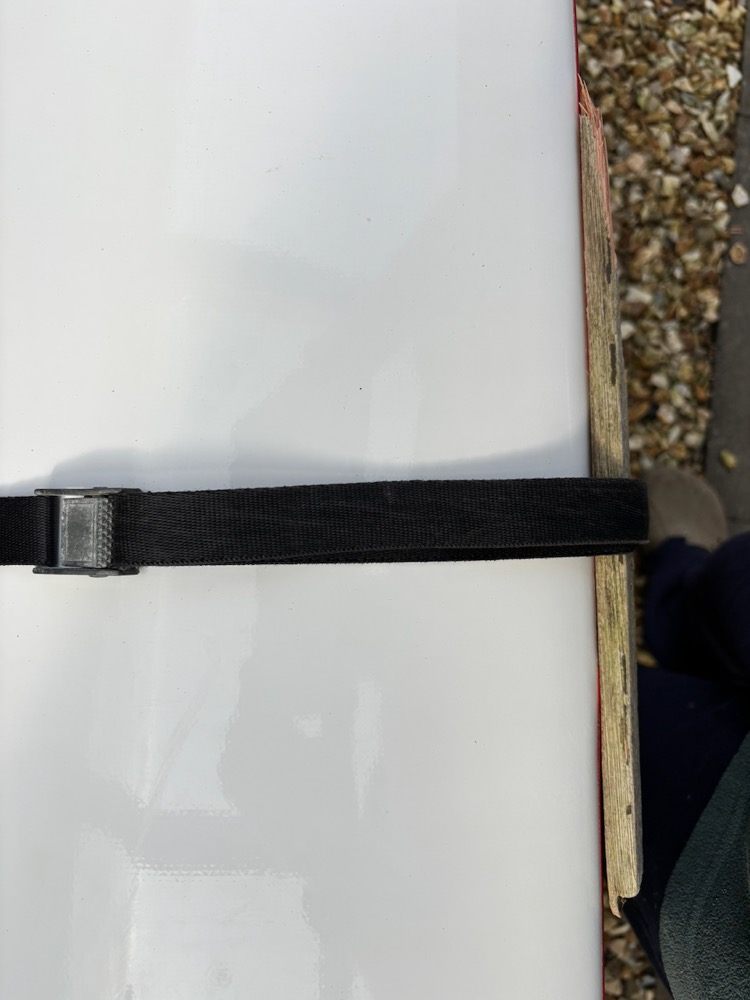
The next step will be to add a strip of cloth and resin along that section of seam, extending slightly onto both the deck and hull to reinforce the joint and help keep everything together. After that I’ll move on to larger patches over the deck and hull cracks to prevent water ingress and add some strength back into the damaged areas.
This one is going to be a bit ugly when it’s finished, but once again I’m aiming for functional rather than perfect.
The Unknown Part
Professional repairs often look almost invisible. Mine do not.
There are slightly rough edges. There are areas that could undoubtedly have been finished more neatly. An experienced composite repair specialist would probably spot plenty of things that could have been done better.
What I wanted was something strong, watertight and functional. If the boats could be safely paddled again, that would be enough.
As I write this, the Think Evo II is ready to paddle and the Knysna still needs a little more work. What I don’t yet know is whether I’ve actually succeeded.
That’s the awkward thing about boat repairs. Looking good in the garage and surviving time on the water are two very different tests.
The real verdict will come when the skis are back on the sea.
- Will the repairs hold?
- Will the seam stay closed?
- Will water stay on the outside where it belongs?
- Will they still be fun to paddle
At the moment, I genuinely don’t know.
Worth Doing Anyway
Whatever happens next, I’m glad I had a go. The boats had already spent years sitting unused because everyone agreed they weren’t worth repairing. Perhaps they were right from a commercial perspective.
But from my perspective they had already become expensive ornaments. Spending £70 and a few evenings giving it a go seemed entirely reasonable. If the repairs work, I’ll have rescued two surf skis that had effectively been written off. If they don’t, I’ve lost £70.
Either way, that’s probably a better outcome than leaving them sitting under a lean-to for another few years and then having to pay someone to take them to the tip
Stay tuned for the sea trials.
They may not be as pretty as they once were, but battle-scarred and still fighting has to be better than pretty but dead. That’s what I tell myself when I look in the mirror anyway.
Discover more from A Simple Life of Luxury
Subscribe to get the latest posts sent to your email.












I agree Al ,not only have you now got the chance of surf skiing again …(hopefully) you have the satisfaction of knowing that you did what no one else was even prepared to try . …..just like yor Father !