The Hebridean Way – Stage 5: Grimsay & North Uist
More Islands
Within four walks I’d already covered 64.8 miles of the 155-mile Hebridean Way. I’d visited five of the ten islands, and a bonus sixth by car, and was about to start day five with a quick trip from Benbecula across the causeway to Grimsay and then across another to North Uist.
This was also the last day that Anna would be meeting me at various points along the way. She’d head home tomorrow, leaving me with a heavier pack full of camping gear to continue the rest of the route solo.
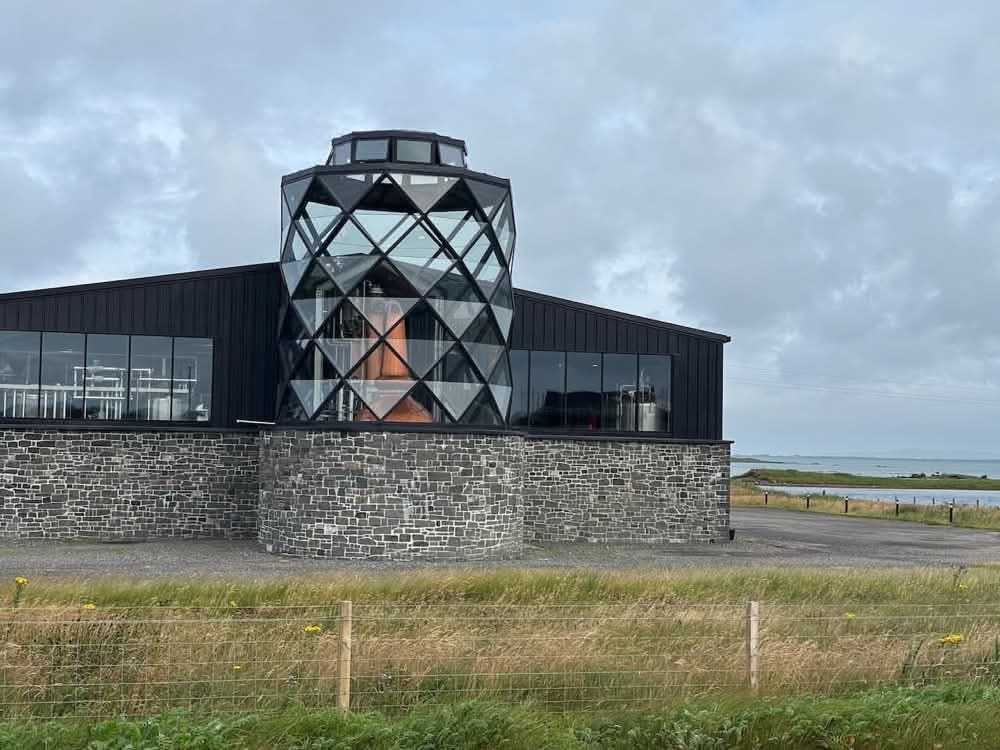
The day started a little grey and damp—as had every day so far. Anna dropped me at the exact spot where I’d finished yesterday, and we arranged our next meeting point. The first few miles were along the road and fairly uneventful, though I passed the impressive Benbecula Distillery, its glass tower showing off the copper stills to perfection.
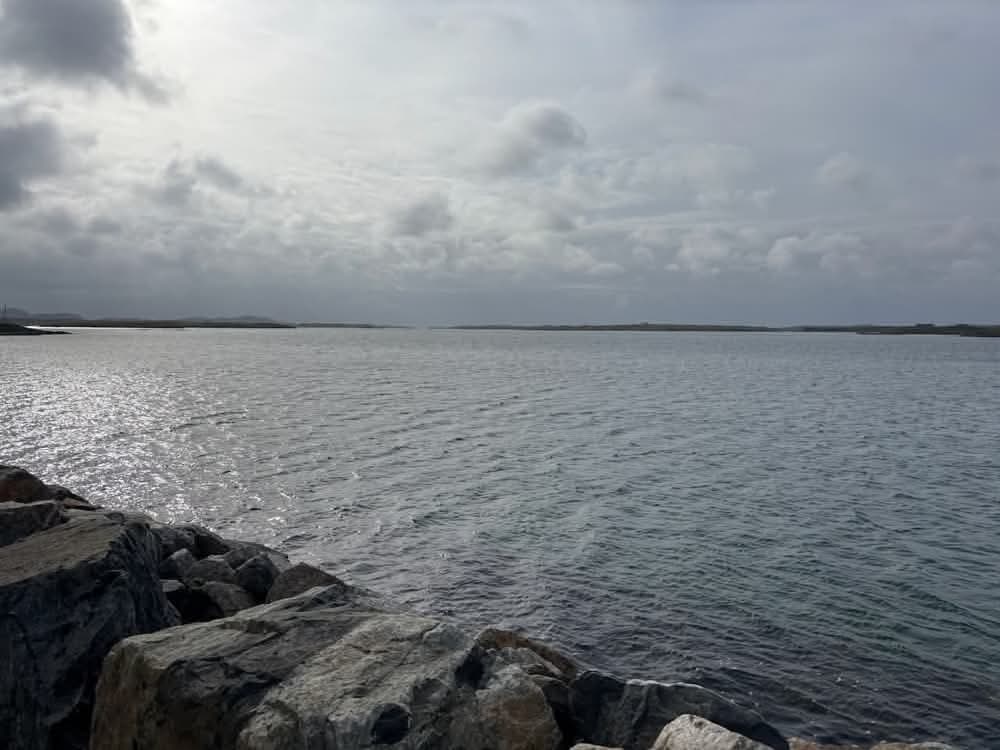
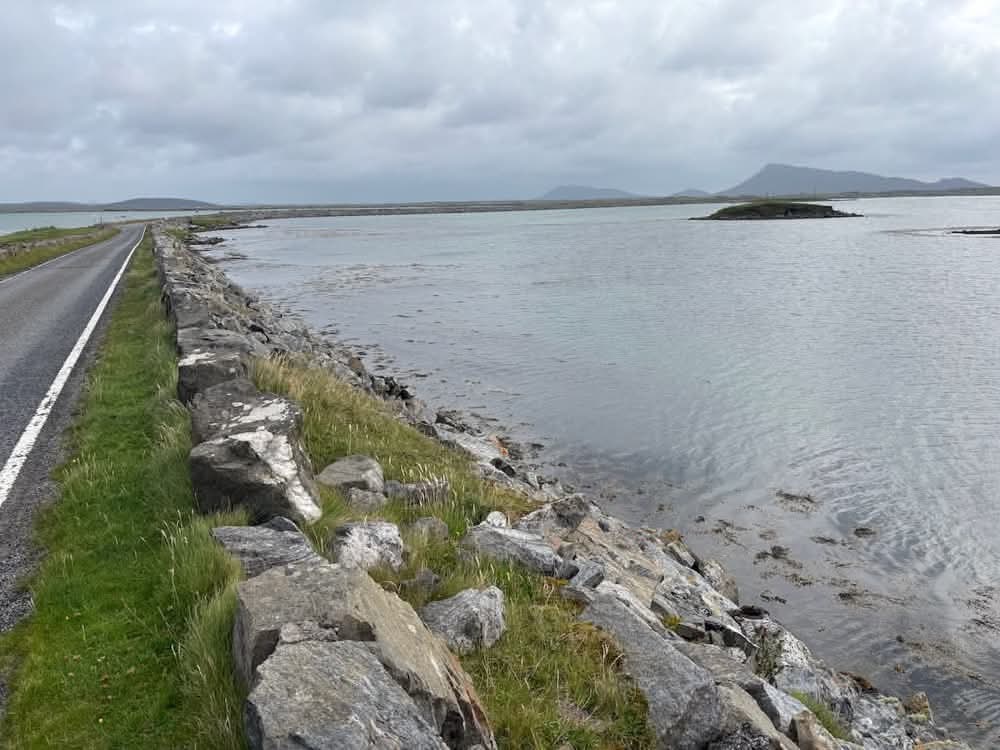
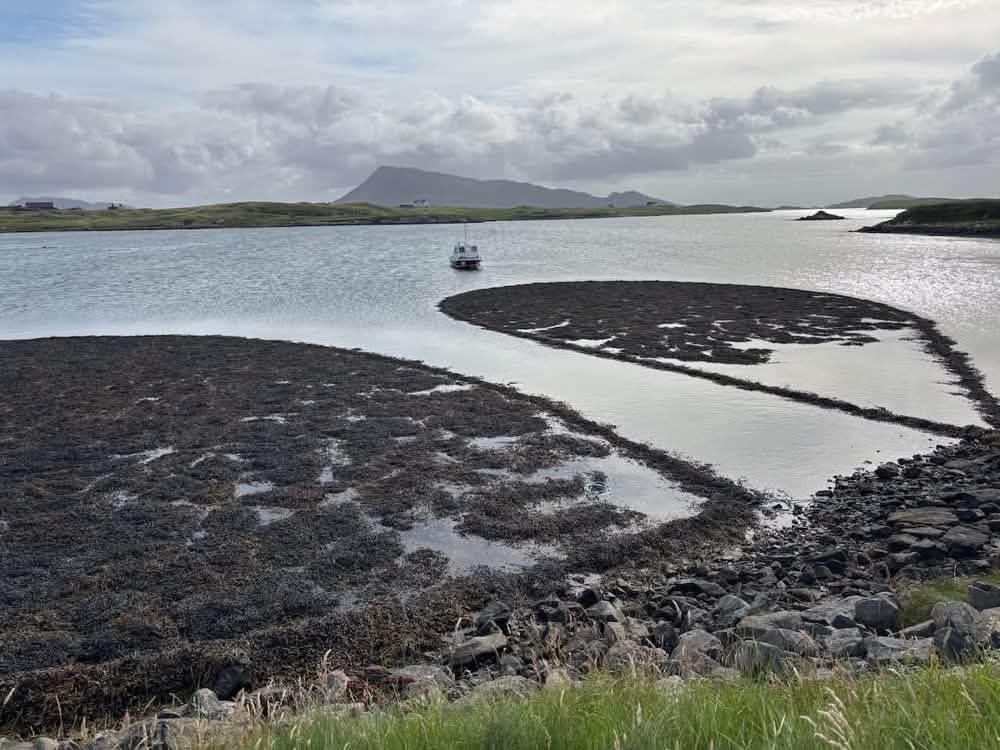
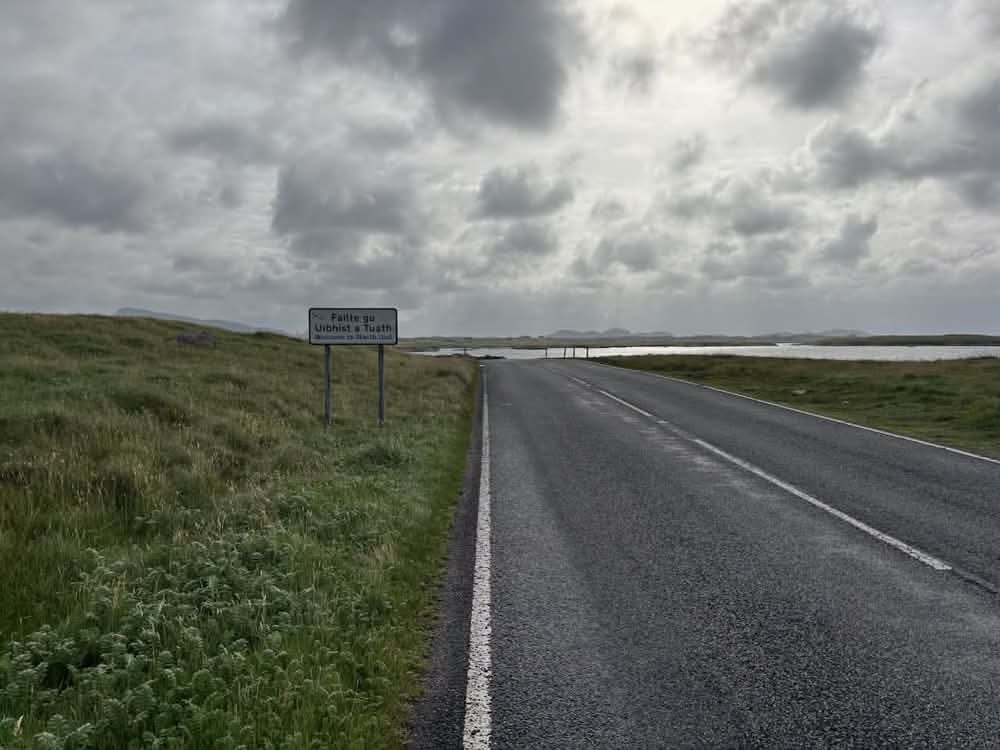
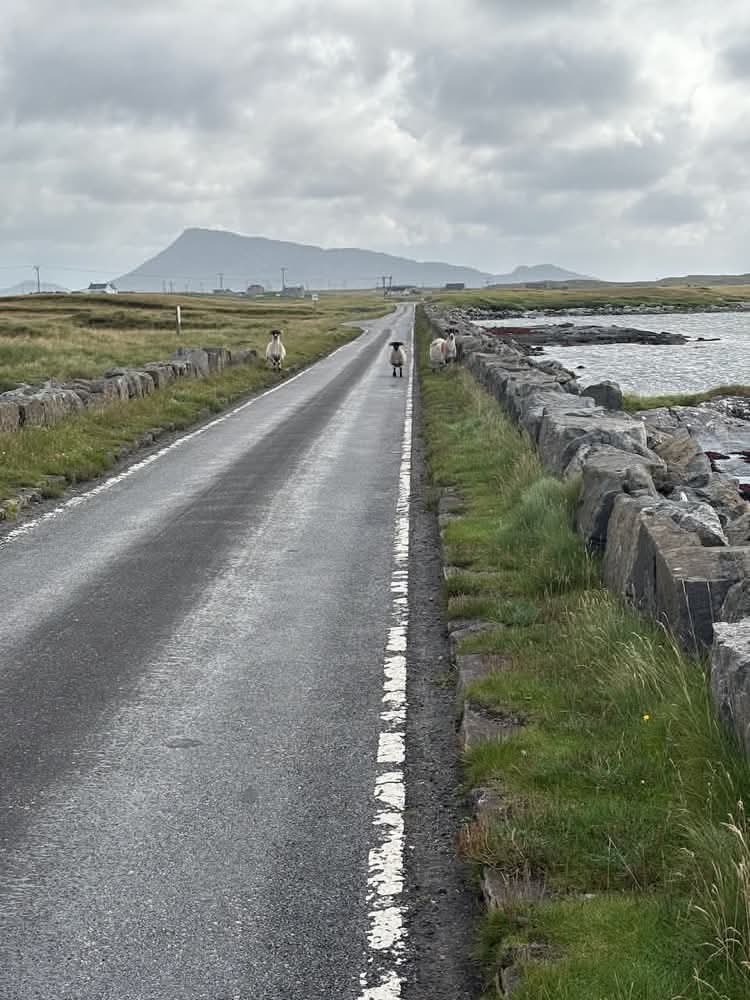
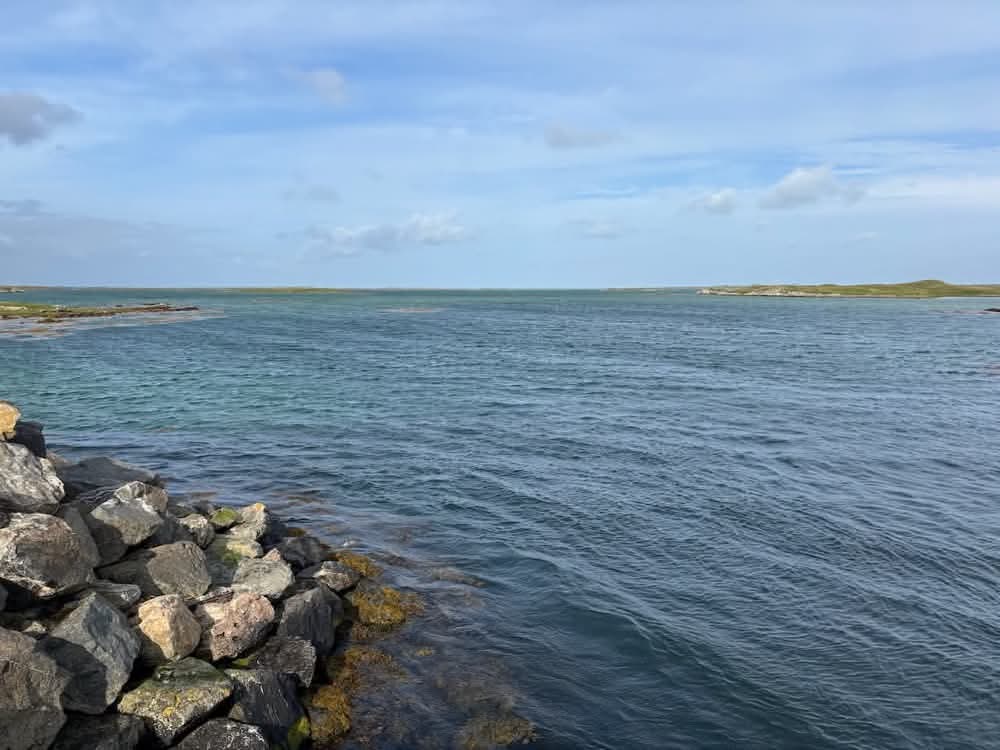
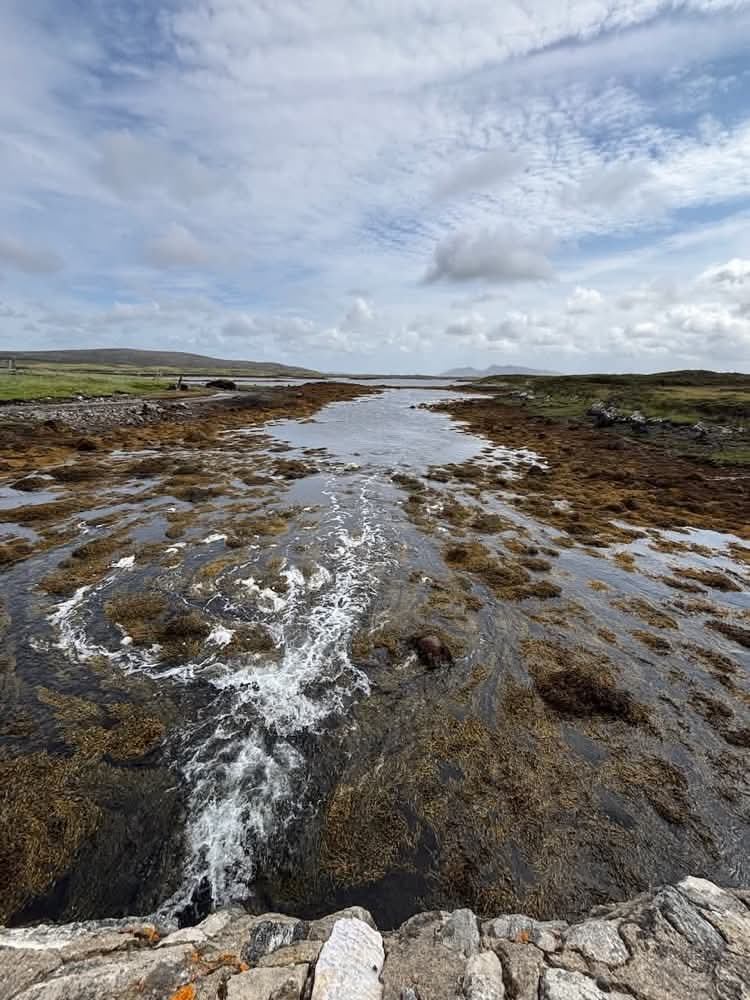
I then crossed several causeways—first to Grimsay (island number 6), and then to North Uist (island number 7). It was quite a windy day, and several spots looked perfect for windsurfing. The wind was whipping up whitecaps in places, though on the leeward side of the causeways, everything was calm and serene.
North Uist Moorlands
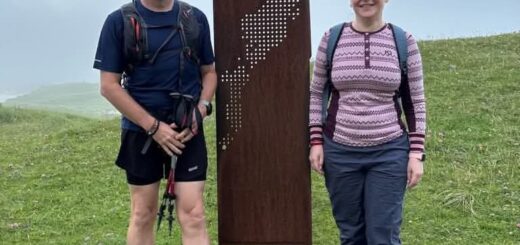
About four miles in, I met Anna at a little car park just before Carinish. From here I would head across country towards Langass Lodge. After a quick catch-up, I climbed the stile and set off toward Loch Euphoirt through a ‘community woodland’ that didn’t seem to have many trees.
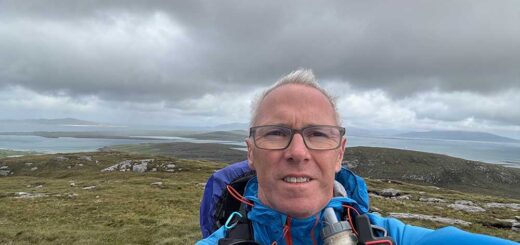
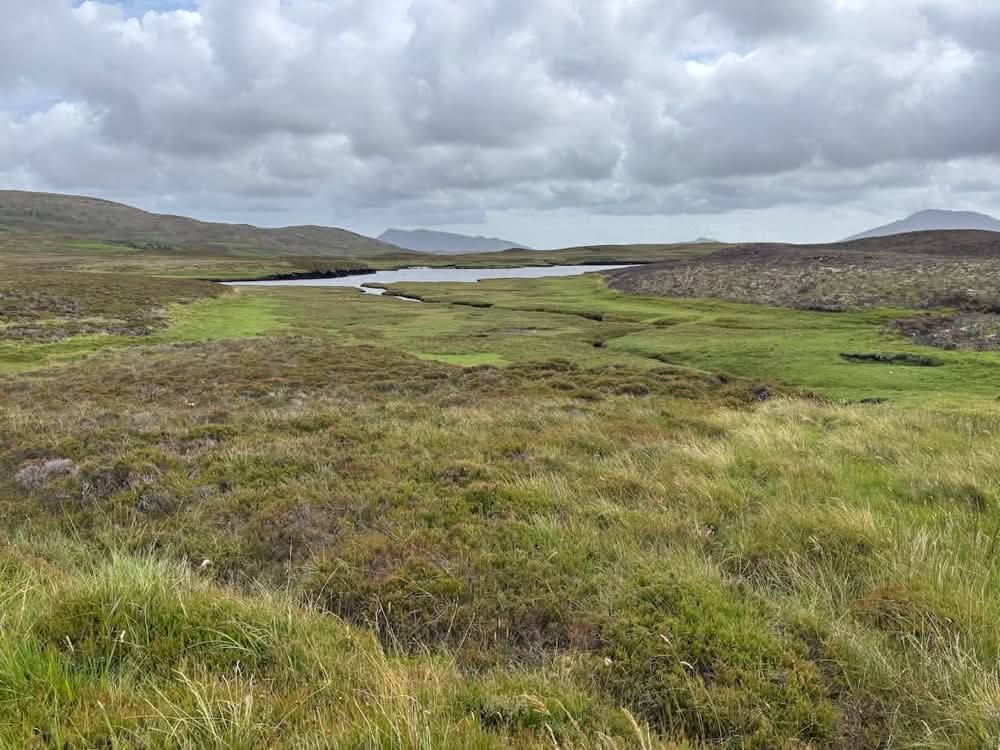
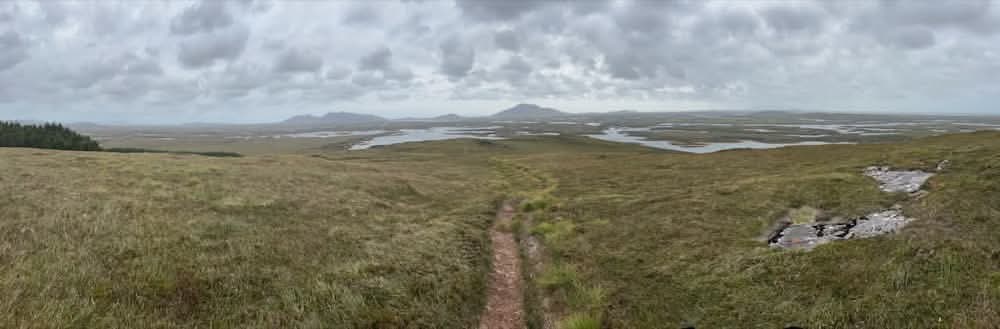
Soon I was out on more open moorland. The path was faint in places, and boggy ground kept me alert. Marker posts and the occasional boardwalk made wayfinding straightforward. I passed the remains of a chambered cairn, crossed various bridges, skirted lochs, and saw a couple of people about to go wild swimming in one of them.
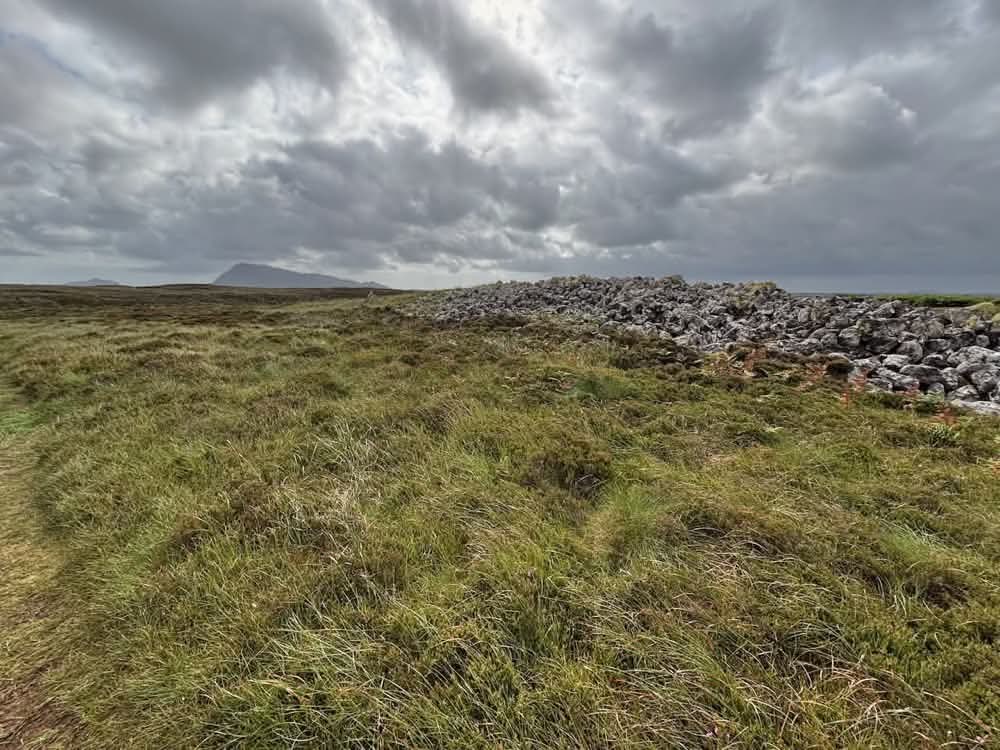
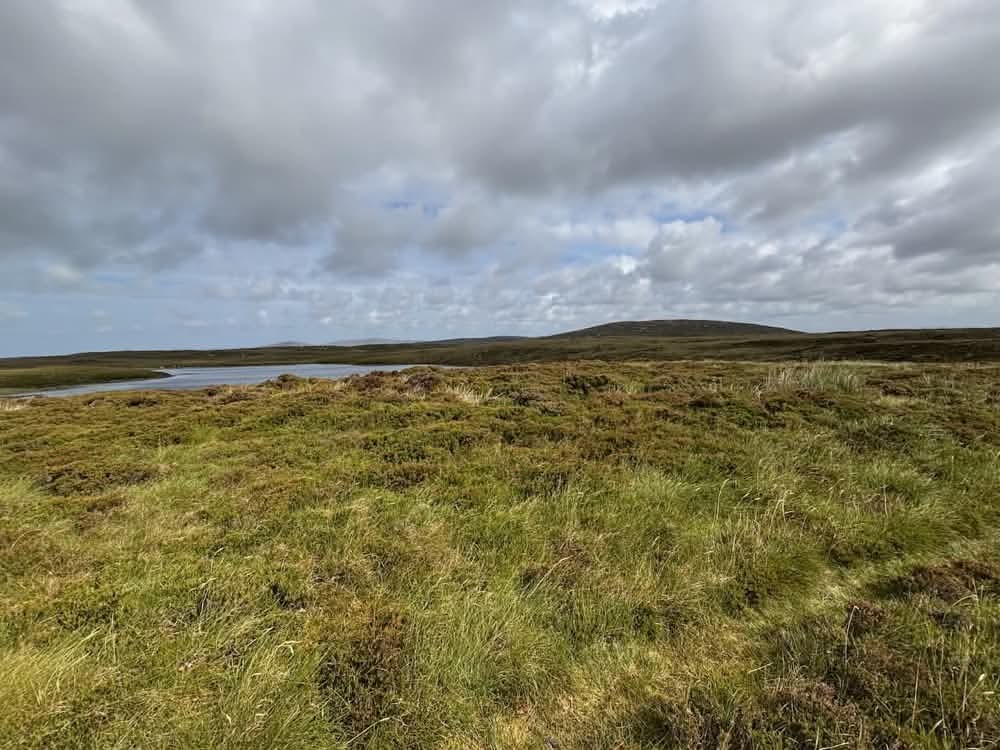
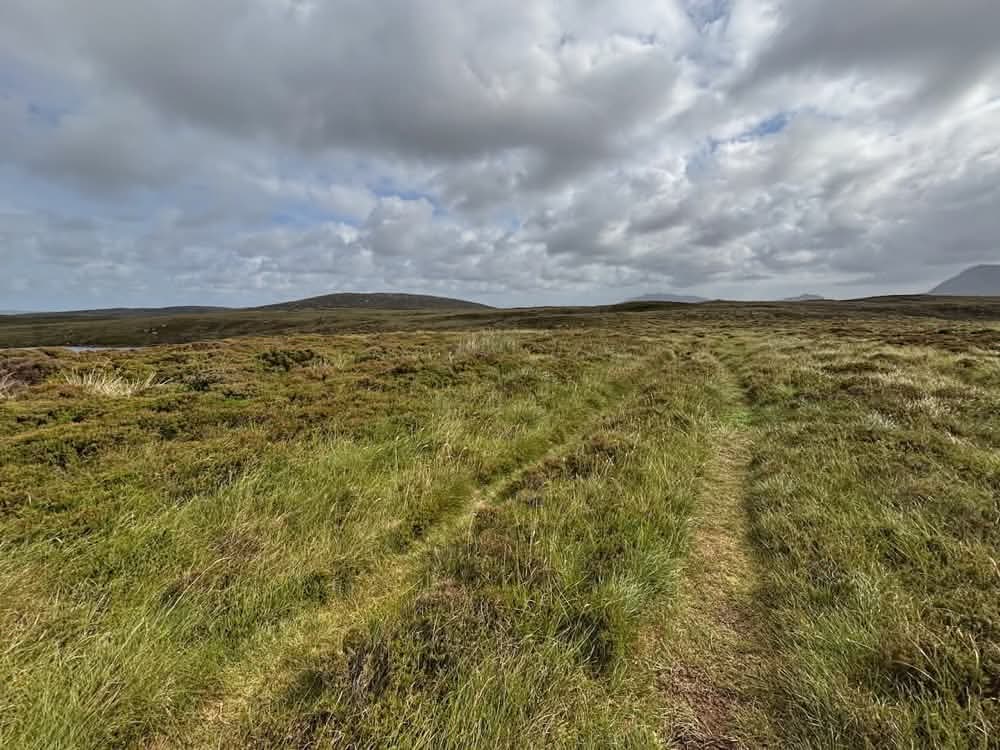
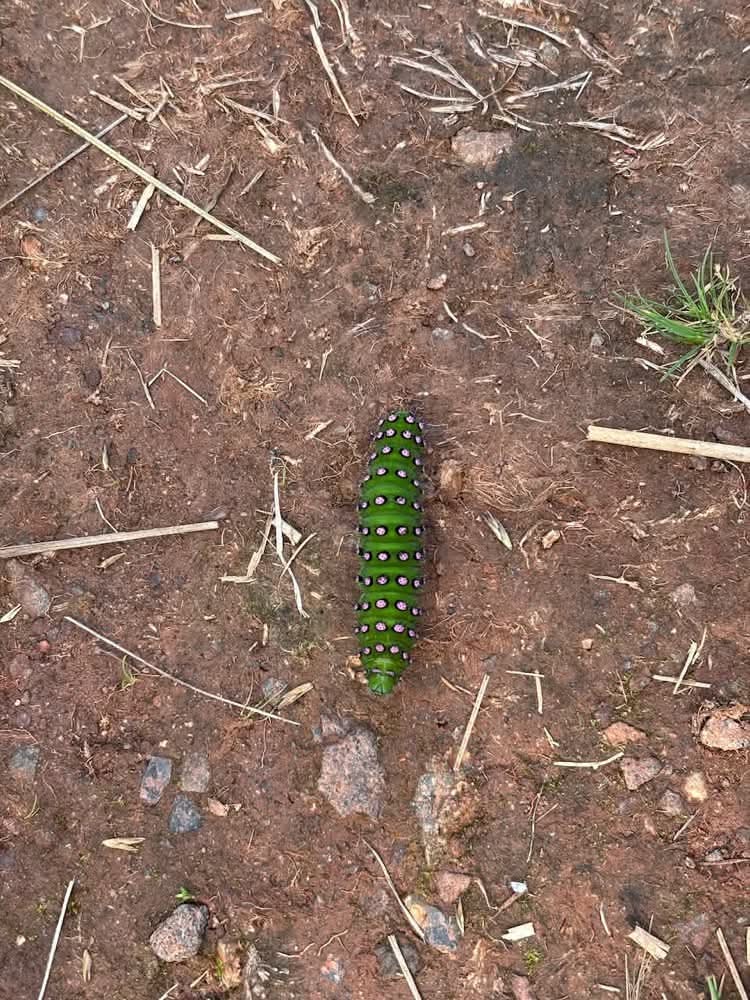
Eventually, I emerged onto a minor road where Anna was waiting—unexpectedly. Apparently, parking at Langass Lodge hadn’t been easy, so she met me here instead. It was still a bit early for lunch, so after another quick chat, we decided to stick with the original plan to meet at the lodge.
While I’d been out on the moors, Anna had driven out to bag another island—Baleshare—and was now planning to visit a nearby ceramics gallery. I followed a short road section and soon caught her up. The ceramics gallery had some lovely things, and the owner kindly topped up my water bottle.
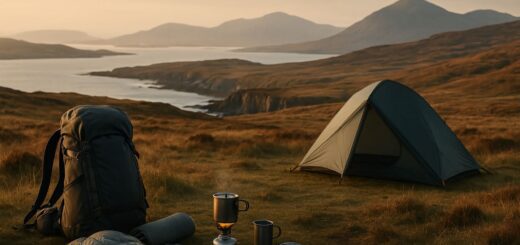
From there, it was back into the moorlands. I crossed between the sea and Loch nan Smalag en route to Langass Lodge, passing more footbridges and spotting potential wild camping spots. Climbing toward the lodge, we noticed a number of unwelcoming “no parking” signs—but stopped for lunch in the car anyway.
Stone Circles and Burial Chambers
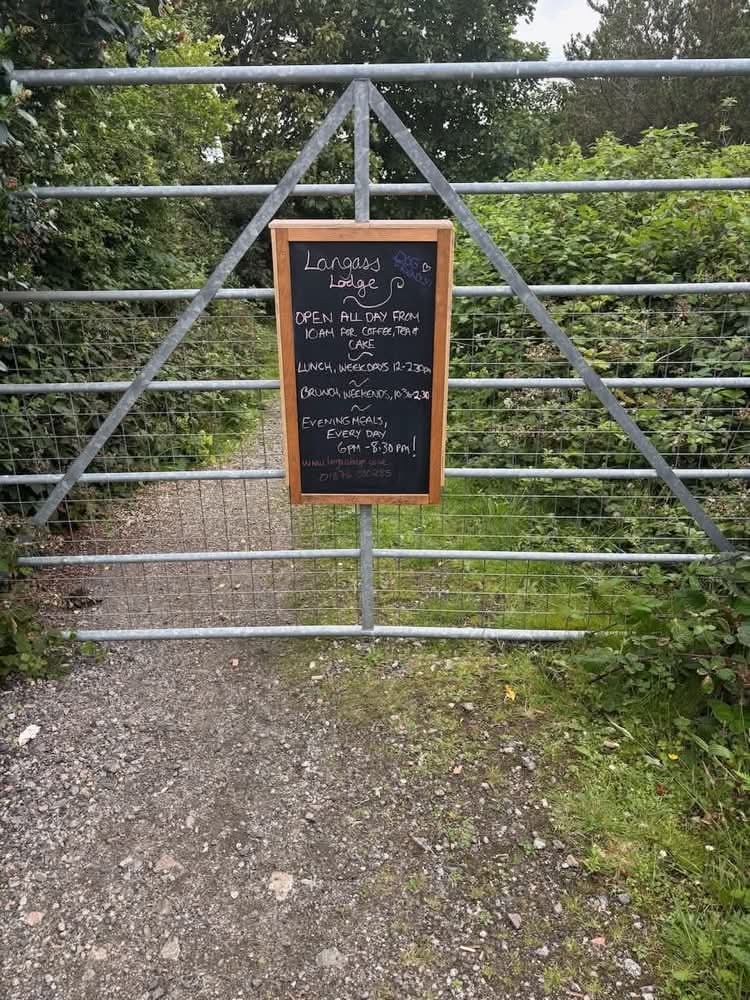
As I left through a gate, I spotted a friendlier sign promising coffee and cake—just what we’d been hoping for—but by then we’d already been put off by the earlier signage. A shame really, as coffee and cake would have hit the spot!
I strolled out to Pobull Fhinn, the only stone circle on North Uist, one I’d visited before. I even took a photo of the exact same stone as last time.
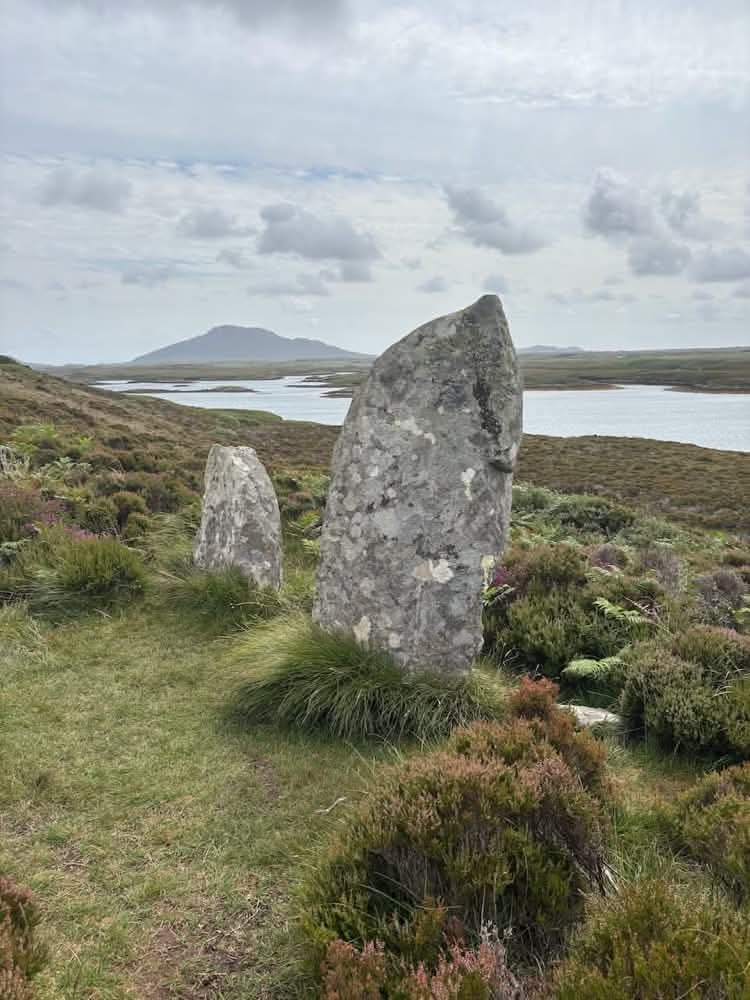
Pobull Fhinn is the best-known stone circle on North Uist and one of the few true stone circles in the Outer Hebrides. The name means Fionn’s people, referencing the legendary Gaelic hero Fionn mac Cumhaill. The circle sits on a low hill overlooking Loch Langass and is oval in shape, measuring about 120 feet (37 metres) across at its widest. There are around 24 standing stones still visible, though it’s thought there may originally have been more. The site likely dates back to the Bronze Age (c. 2000–1500 BC) and may have served ceremonial or ritual functions, although its exact purpose is lost to time. With sweeping views across the loch and moorland, it’s an atmospheric place, especially on a quiet day—one that evokes a sense of timelessness and mystery.
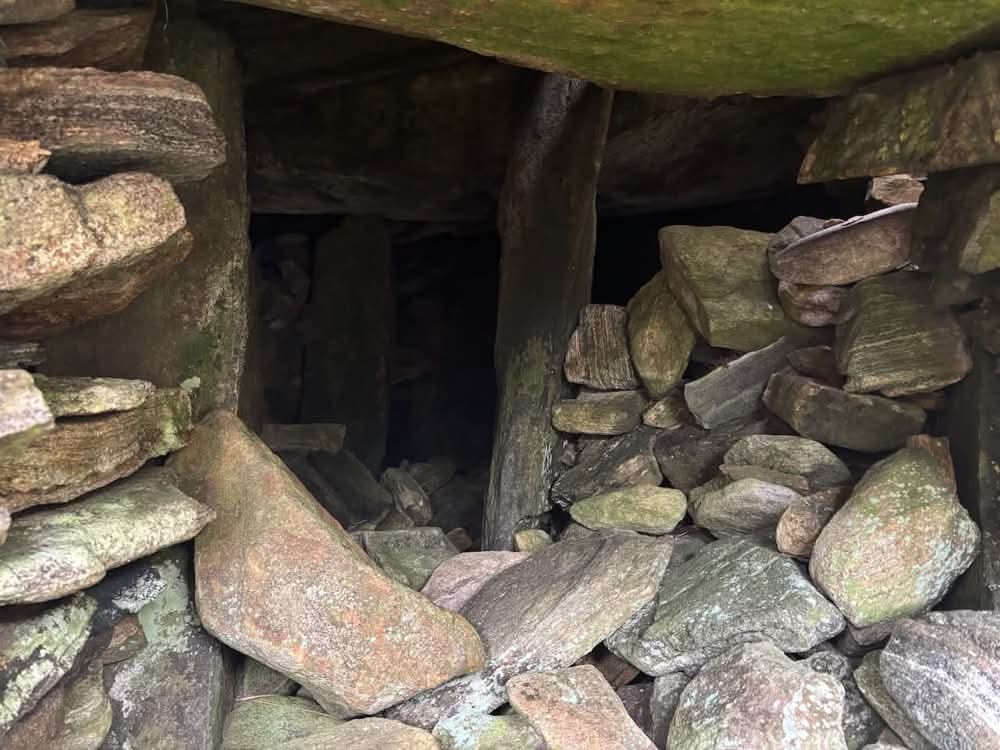
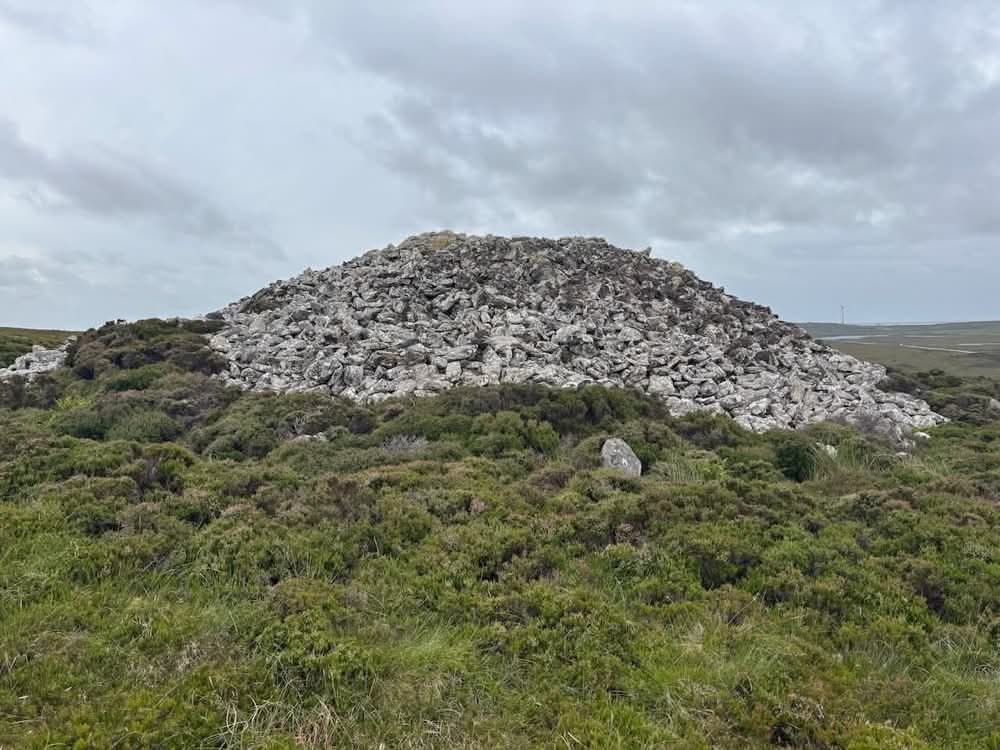
From there, I detoured off the main route and climbed the nearby hill to bag a summit, then descended toward Barpa Langass. This is the best-preserved Neolithic chambered cairn in the Outer Hebrides. Around 25 metres in diameter, it would once have dominated the surrounding landscape. It likely served as a communal resting place rather than for a single leader. Many such tombs align with the midwinter sun, though the entrance at Langass faces just south of east.
Last time I was here, the entrance was open. Unfortunately, a recent collapse means it has now been barricaded off—but I managed to snap a photo of the interior through the gate.
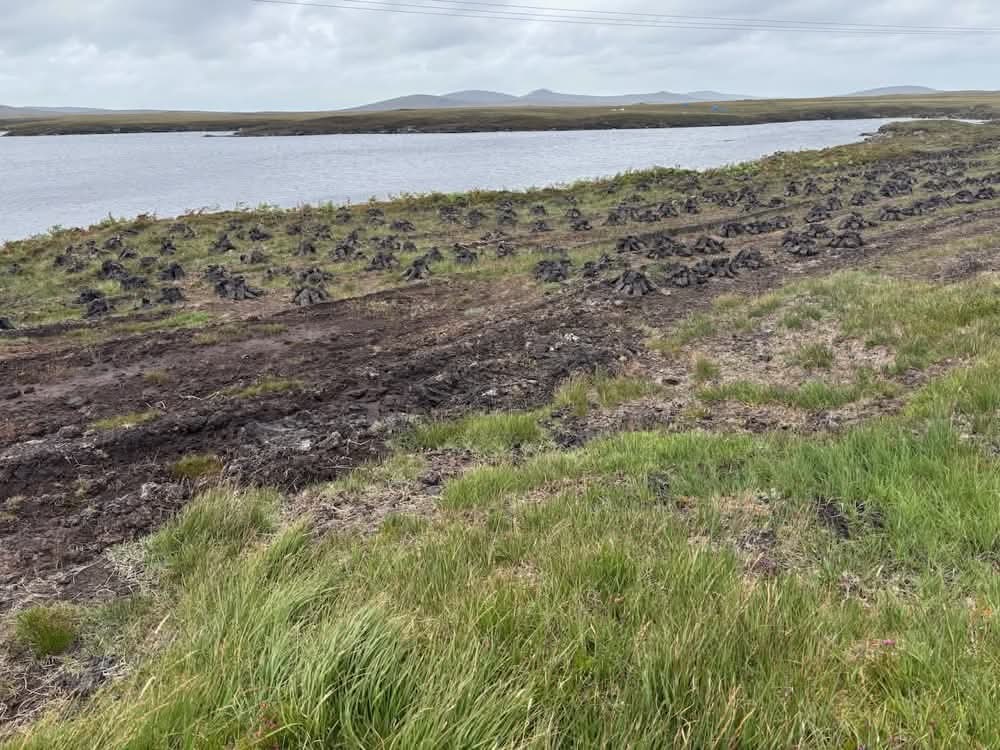
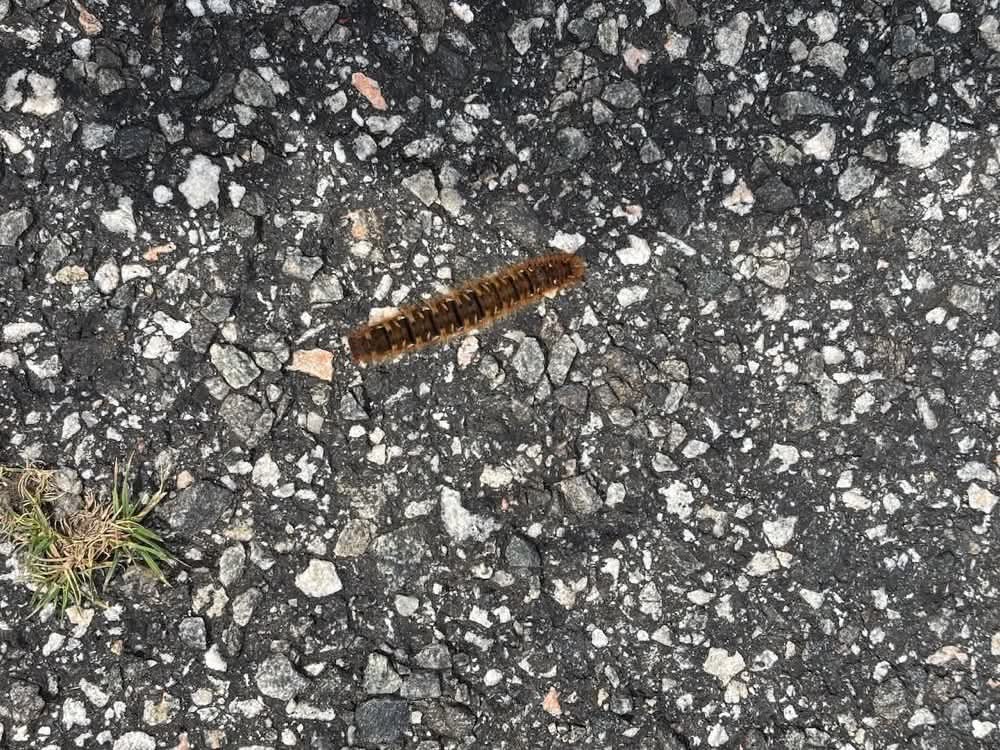
This detour added a little distance to the day’s walk, but not much. I rejoined the official route on the road, which continued for a long, somewhat tedious stretch along the old tarmac road beside the new one. As I followed the old road across the moorland, it was impossible to miss the scars of traditional peat cutting—neat, dark trenches carved into the bog, with stacks of dried peat bricks beside them. Peat has long been used here as a vital source of fuel, especially in places where trees are scarce and winters are raw. Families still cut peat for home fires, drying the sods on the moor before stacking them in orderly piles for collection.
The process is slow, labour-intensive, and deeply rooted in Hebridean tradition. It gives the landscape a strangely patterned look—part industrial, part timeless—and adds a sense of human connection to this otherwise wild stretch. There’s a quiet dignity to it, a reminder of how people have worked with, rather than against, this land for generations.
Eventually, I met Anna again and walked the final mile or so with her. By then, my legs were sore and my sciatica was slowing me down. It was good to see the car.
Visiting Favourite Spots
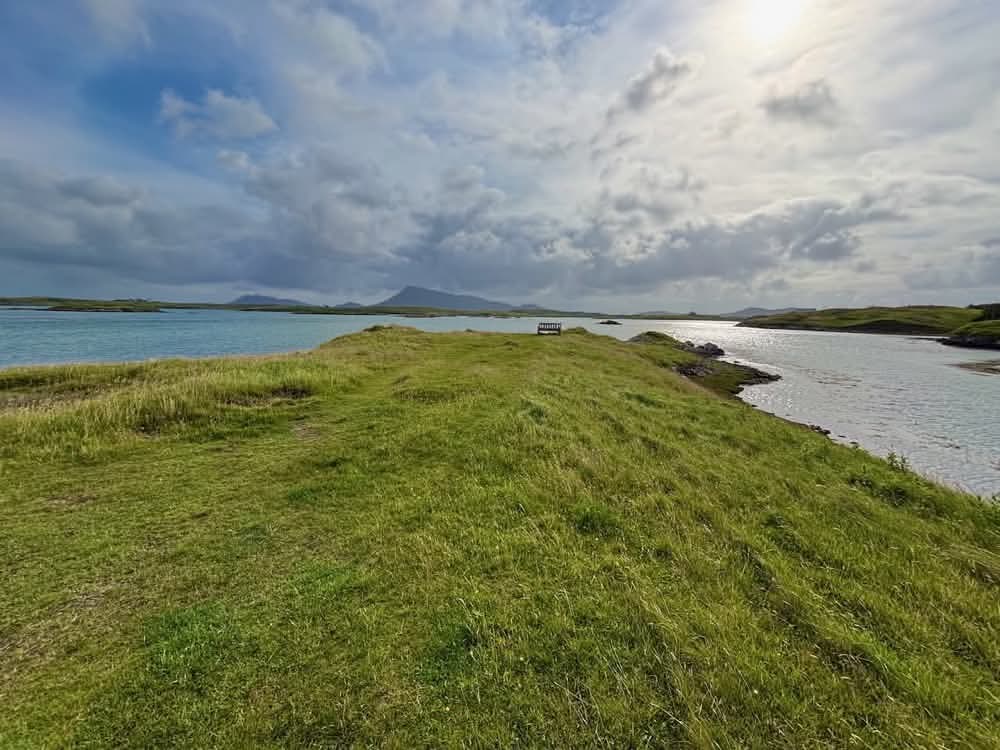
As Anna would be heading home tomorrow, we wanted to visit our favourite island—Berneray—one more time. We drove to our usual spot and parked up on the grass overlooking the Sound of Harris. Last time we camped here for a couple of nights and didn’t see a soul. It had been idyllic.
It was still just as beautiful, with turquoise seas, amazing views, and that peaceful, timeless feel. But this time, we weren’t the only ones. Several vans and tents were already set up for the night—hard to blame them really. It’s the perfect spot.


I went for a paddle in the sea, and we sat quietly taking it all in before heading off for a drive along the northern and western side of North Uist, revisiting some of our favourite places.
We stopped at the Westford Inn for dinner—delicious food—and then returned to the B&B to get ready for a change of pace. Tomorrow, Anna would be navigating trains, planes, and buses on her journey home, while I would be hoisting a heavier backpack and setting off alone.
Discover more from A Simple Life of Luxury
Subscribe to get the latest posts sent to your email.