Coastal Gardening – Wind
When you think of the problems affecting coastal gardens the first issue that springs to mind is the wind. Living on the coast means that there is an uninterrupted flow of wind from the sea straight into your garden and the affects can be dramatic.
Very few people live right on the coast and it only takes a few obstacles such as trees, buildings or small hills to provide some protection. However, we do live on the coast and there is nothing between us and the beach so we experience the full force of the winds. You only have to go inland a little way to see how things change with a little bit of protection. Gardens just a short distance away are awash with colour and have a wide variety of plants and flowers thriving in them. Things aren’t quite so rosy in most gardens here.
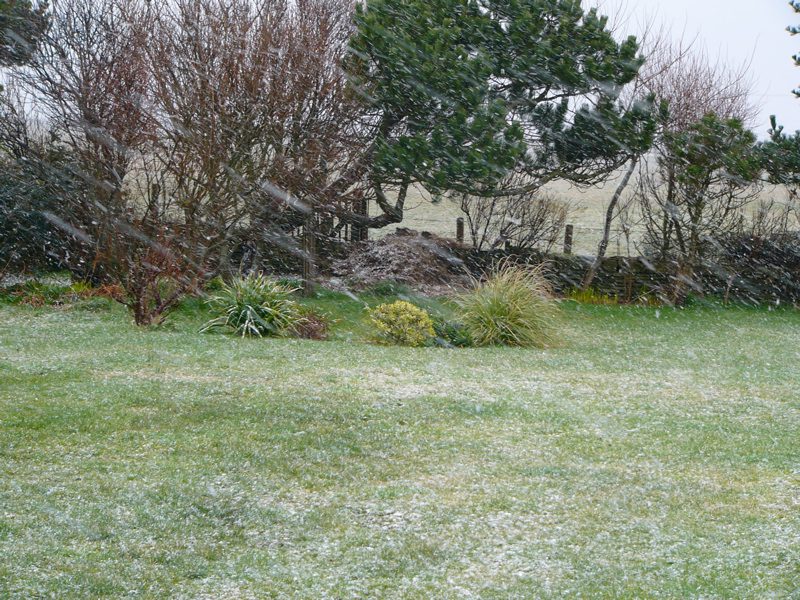
Very little shelter from a cold North wind
I’ve worked for many years helping people out in their gardens and almost everyone seems to think their garden is exposed and windy, but until you’ve experienced living right on the coast you can’t understand the meaning of a truly exposed and windy garden. It isn’t just the strength of the wind but the incessant nature of it. We have a weather station in the garden that uploads live data to the internet every minute and it shows just how much wind we get. Whereas most people start thinking things are getting windy when the anemometer reaches around force 4-5 it is rare for us to ever have a day where it doesn’t reach this and more often than not it is much windier. Worse still, it just doesn’t stop blowing. We often get weeks on end where the wind just doesn’t drop.
Sounds bad? Well it gets worse. Most coastal gardens are affected to a greater or lesser degree by winds coming in off the sea. For people living on the west coast such as us this means that the prevailing wind is from the west so at least there should be a respite from the wind if it swings around and comes from another direction. Not so here. In fact, we have a special katabatic wind (known affectionately as Ivor) that funnels down through the Dovey Valley and blasts us with cold, dry winds from the East. This wind is stronger and just as persistant as winds off the sea and means that there isn’t a wind direction that doesn’t affect us. There is no getting away from the fact that this really is a windy place (which is why, as a windsurfer I wanted to live here).
Effects of the wind
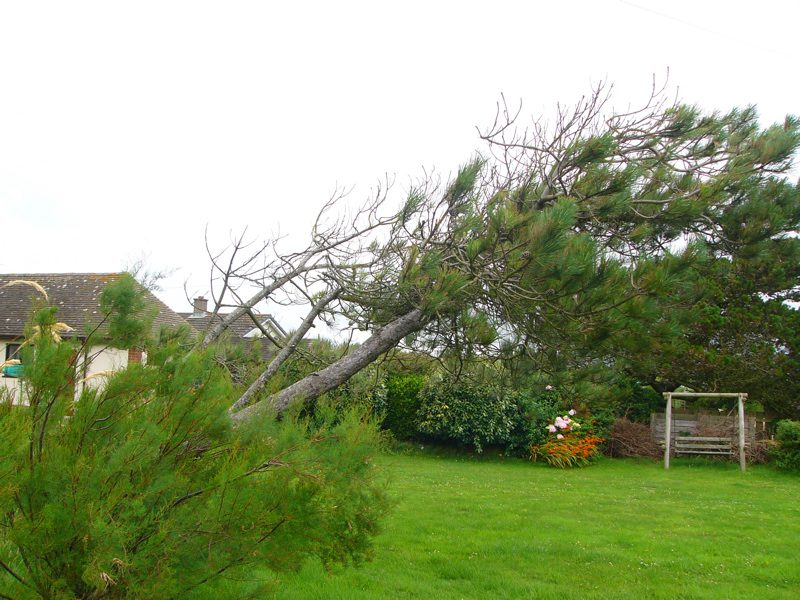
The effects of big storms on your garden are easy to see. Broken plants, snapped branches, uprooted trees, overturned containers, broken panes in the greenhouse and such like. Lesser winds also have an effect, drying out plants and creating wind burn, the visual effects of which are burnt leaves and blackened stems. It can impede plant growth, stops young seedlings in their tracks, severely stunts trees and shrubs, and forms dramatic windswept shapes to larger trees. Many plants simply can’t cope with the extreme winds we experience here.
What can be done?
The obvious thing to do in order to protect from the wind is to create a shelter belt. Few of us have room for a full-on shelter belt consisting of a thick plantation of wind resistant trees, but just a single row of such plants can help create some shelter. Every little bit helps and as the number of plants you have in the garden increases you can produce your own little micro-climate in which the less wind-resistant plants can survive. Of course, you don’t want to go over the top otherwise your garden will soon feel over-shadowed and too enclosed. Another option is to build small banks that help protect from the wind. Again this may take up a little too much room in a small garden.
Fences and other garden structures can also be used to good effect to provide shelter. Open structures are better than solid ones as they dissipate the wind rather than deflect it. When wind hits a solid barrier such as a brick wall or panel fence it tends to deflect upwards only to descend with greater turbulence on the other side. Where possible several lines of defense are best. For instance an open fence with wind resistant hedging behind it.
The other thing is to choose your plants carefully and pick those that are more resistant to winds.
Wind Resistant Plants
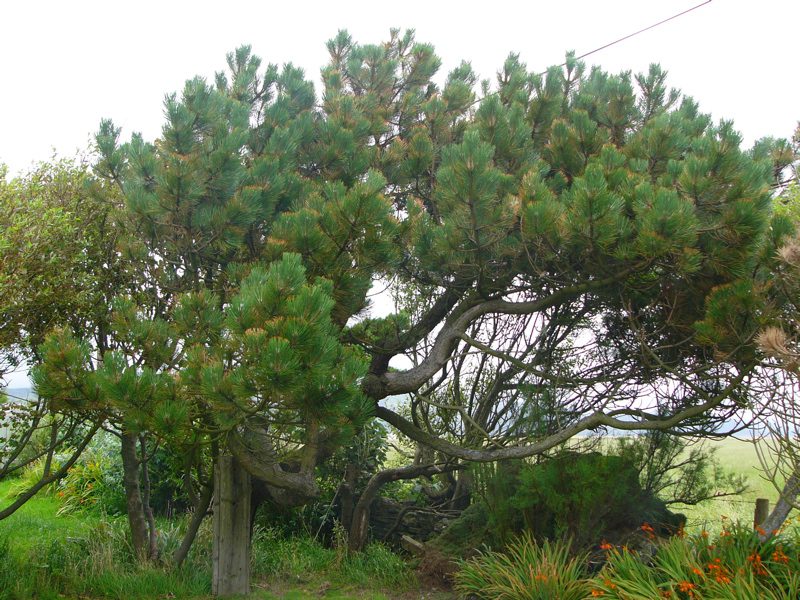
Trees that will put up with the worst wind conditions and ones traditionally used in coastal shelter belts, include pines such as Pinus nigra, P. pinaster and the Scots pine (P. sylvestris). We have pines here and although they survive they are prone to wind burn and tend to be very lop-sided. It is also difficult to get them to grow straight as they tend to adopt the typical windswept look of a coastal tree.
Willow and White Poplar (Populus alba) also do well here. The willow grows well, but can look a little untidy once windburnt and can become a little too invasive. The Poplar again does well but the new growth is easily damaged by summer winds. If both are kept under control with some hard pruning though they do offer good protection from the wind. The willow has little ornamental appeal but the leaves of the Poplar are fairly attractive. Both are deciduous though so don’t offer much in the way of protection or decoration in the winter.
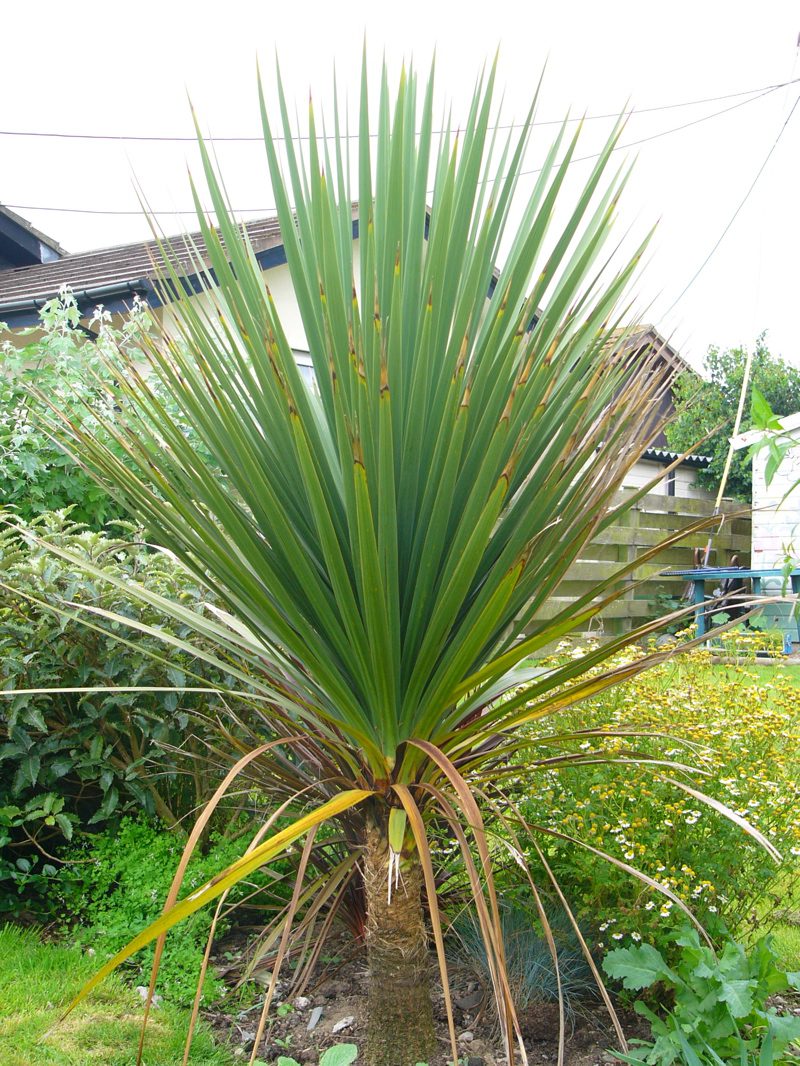 Cordylines such as Cordyline australis (Autralian or Manx Cabbage tree) fare well and add a tropical touch
When it comes to shrubs, Escallonia is the obvious choice for creating shelter, but it is a little common around here. Even this gets pretty badly windburnt and despite its pretty pink flowers in the summer can look a little ugly in the winter. The evergreen Griselina littoralis, with its glossy, lime-green leaves is a good choice. I’m also having success with Olearia sp. (Daisy Bush) which does well, but again can look a little worse for wear due to windburn in the winter.
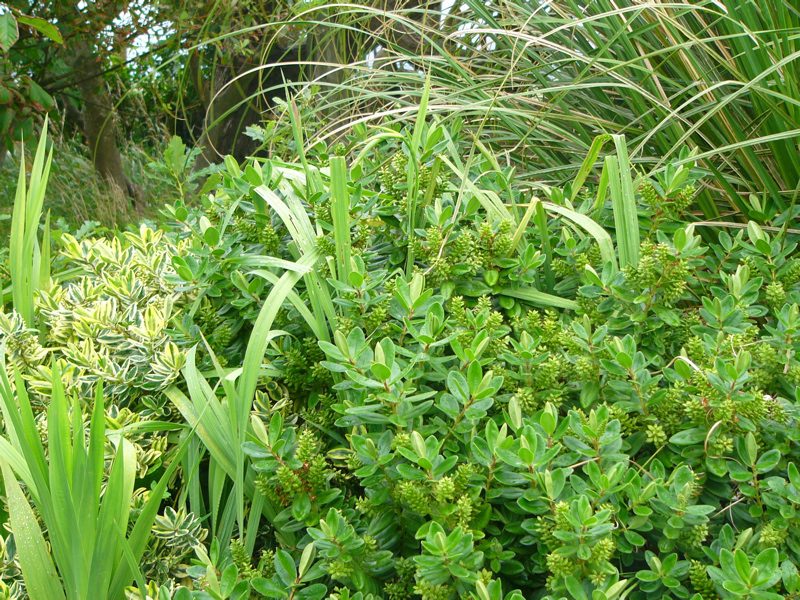 Other shrubs that are doing well in the wind although not creating much in the way of shelter are various Hebes and a lovely Golden Elder (Sambucus nigra).
As well as creating shelter from the wind it is also worthwhile making the most of it and planting grasses and bamboos that not only tolerate the wind but are at their best when being whipped about by it. The movement and sounds created by these plants can bring the garden alive. We have a large pampas grass (Cortaderia selloana) that is doing well and adds just such life to the garden. As with many things that do well though it can become a little too large and needs to be kept under control. Stipa sp. and Miscanthus sp. are also likely to relish such conditions although I’ve yet to try them.
It takes time for smaller plants to grow large enough to provide suitable shelter so progress is slow but the results make it worthwhile. For those with deeper pockets then larger plants can be bought to speed up the process and more use could be made of the faster growing varieties. The willow and Poplar are particularly fast growing.
As you can see, the wind can be a problem for coastal gardens but with some careful planning it is possible to both limit its effects and work with it. As our garden matures hopefully it will become less of an issue. The addition of various tress and shrubs to create shelter has helped already and structures such as a pergola with some climbing plants is helping too. We’re now able to grow some less wind-resistant plants in the lee of these.
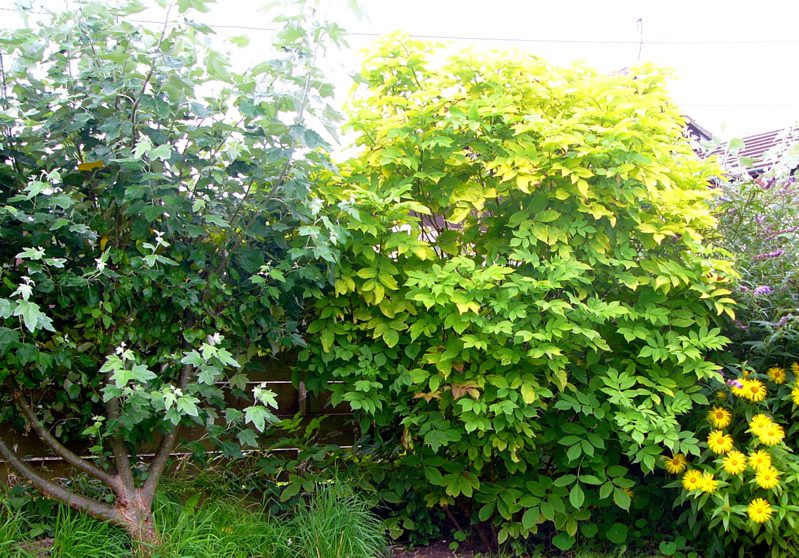
White Poplar and Golden Elder providing some summer shelter
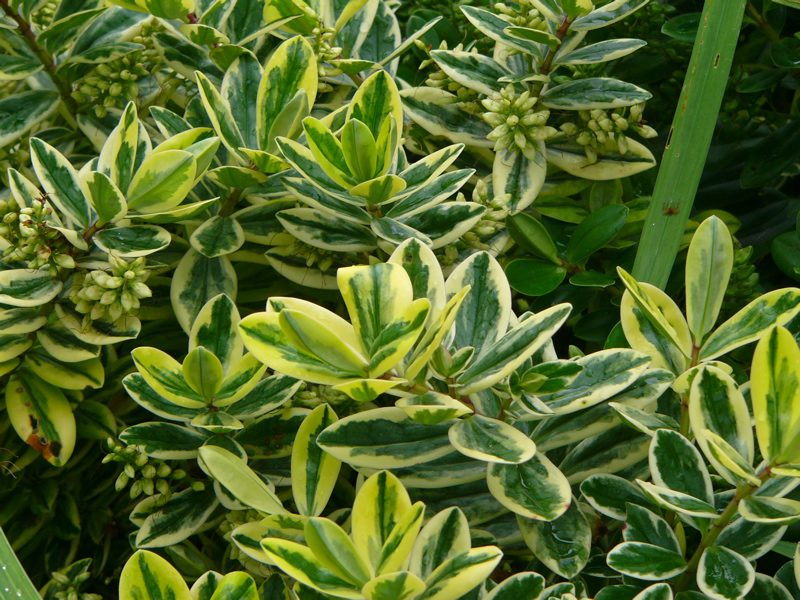
Variegated Hebe providing all year interest
Related Articles
This article is part of a series on Extreme Coastal Gardening
Discover more from A Simple Life of Luxury
Subscribe to get the latest posts sent to your email.














Hi
I live in the far north of Scotland (John O Groats).
My House is very coastal, i.e. the spray from the sea sometimes hits my windows and the salt then prevents me seeing from them.
I would still very much like to have a nice garden.
I am keen to plant some hedging for privacy and tree for a memorial.
Could you help me by giving some suggestions?
Gregor… It won’t be easy, but persistence will get you there. As far as a specimen tree goes then I think your best bet will be one of the tough pines. I doubt that you’ll get it to grow straight but at least it should be able to survive the wind and salt spray. We also have quite a bit of success with the Cordylines here. I’m not sure how well they’ll do further North, but I have seen them growing on the Scottish islands quite well and once again they do well in the wind and the salt and will even grow vertically!
As far as hedging goes then the first thing I’d recommend is getting friendly with some other local gardeners and getting as many cuttings as you can from them. At least then if they don’t take and don’t survive in your harsh conditions then at least it won’t have cost you anything. That way you can feel free to experiment. The old favourites such as Escallonia and Griselina should do well.
We’ve just ordered some Goji Berry bushes to see how well they put up with the wind and sandy soil.
Good luck.
Al.
Hello,
I live in Perth, Australia and have a Cordyline – purple sensation which got burnt this summer by the sun while I was away on holiday for a week when it also didn’t get watered. It now looks like it has died but a bit of it might still be alive. Could you advise me what the best way to handle this it – should I trim the dead leaves back and hope it re-shoots?
Thanks
Hi Shelley,
We don’t really have a problem with sunburnt plants here in Wales but I would advise leaving it and seeing how it recovers.
Al.
I live in the North West of Ireland.
And always wondered about a garden by the coast.
Alan, thanks for sharing you tips
I might give it a go soon 🙂
Aanee
Help!!! I live a little up the welsh coast from you in north wales. Like you, we live right on the coast. I planted my veggies last week in 1/2 whiskey barrels. With the wind we’ve had this week my tomatoes and peppers are black from the wind. Is there anything I can do to rescue them? Alot of my herbs have been battered too but only on one side so I think I cam save those.
Hope you can help.
Claire
Hi Clare,
I feel your pain, it’s been pretty mad here the last few days – good for windsurfing though! I doubt there will be much you can do to revive the tomatoes and peppers, although they might come back on their own accord. I’m sure most of the herbs will be OK though. Most of them are a bit tougher as well.. Our peppers and tomatoes are still indoors thankfully. Although I did put out some beans, peas, courgettes and pumpkins out last week, but they are sheltered behind fences and larger, wind resistant plants so seem to have fared OK in the wind.
Looks like it might be a trip to the garden centre for some replacements for you though. 🙁
Al.
Hi there, just a correction on the Cabbage tree, Cordyline australis, it is a New Zealand native, Australia is a beautiful country, but were not part of it 🙂 thanks
Help. we live in what must be the worst wind in the uk it’s on top of a cliff.
I would love to grow lovely things but I need a wind break space is no problem the garden is huge.
The wind seems to come from all directions there is nothing between us and the sea.
Beautiful but gales force winds nearly every week even in the summer