Maximising Solar and Off-Peak Tariffs: More Storage, More Savings
Having had our solar panels and home battery storage system for four years now, we’ve grown used to its capabilities and the money it saves us. It’s also given us time to evaluate it and decide where best to upgrade next. The obvious choice was to add more battery capacity — so that’s exactly what we’ve done, with the addition of a second 5.8 kWh battery. This doubles our storage to a total of 11.6 kWh.
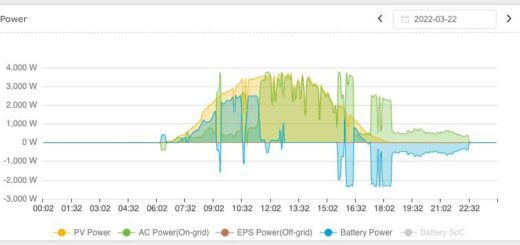
At this time of year, when the solar panels aren’t producing much, this extra capacity allows us to “rate shift.” In other words, we can store cheap-rate electricity overnight (currently 7p per kWh) and use it during the day, when electricity would cost 32.96p per kWh. That’s a saving of just under 26p per kWh used.
In summer, when we generate excess solar power, the extra storage will let us capture more of what the panels produce before exporting to the grid. Normally we wouldn’t charge the batteries overnight in summer because the solar alone covers our daytime usage. However, with the current export rate at 15p per kWh, it still makes sense to top up the batteries overnight at 7p/kWh and then sell the solar-generated electricity back at 15p/kWh.
These tariff figures obviously depend on what plan you’re on, so we’ve recently moved to the Octopus Intelligent Go tariff to maximise savings by accessing one of the lowest off-peak rates available. It also gives us six hours of cheap-rate EV charging every 24 hours. It won’t suit everyone, but if you use the link above to sign up you’ll get £50. Don’t forget to factor in the daily standing charge too, which is currently 68.34p. Octopus offer other competitive tariffs as well, so it’s worth checking which is best for your usage. Their customer service has been good, the app is nice, and they seem to be doing sensible things to balance energy across the grid — encouraging people to use electricity when there’s a surplus and conserve it when there isn’t. That sounds fine to me, especially when the “carrot” is money saved.
Battery technology has moved quickly in the last few years, so even though our original battery is only four years old, finding a compatible unit for a retrofit wasn’t straightforward. Newer models have extra features such as force-discharge to the grid. Those would have been nice, but upgrading to them would’ve meant replacing the whole system rather than just adding to it.
In the end, we asked David from Smart Home Electrics to source a suitable battery and install it for us. It’s good to use someone local, and even better when they’re genuinely into home automation and energy tech rather than just fitting the hardware. David’s definitely on the techy end of the spectrum, and I think he enjoyed the fact that we knew what we were talking about too.
He soon found a compatible battery and had it installed and configured. It does take up a bit of room – sorry Morgan, you’ve lost some space, but it was still the best place for it. It’s now up and running and already saving us money. Ideally, the energy stored in both batteries will now last us through most of the day so we barely need to import anything at peak rate. I say “barely” because some things still pull straight from the grid — the electric shower, for example, draws more than the inverter can handle, so it’s supplemented directly from the mains. Maybe that’s the next thing to improve. David also tried to tempt us into a heat pump and new heating system… which would save money, but it’s a big commitment and a much longer payback period than the new battery.
If you don’t already have solar panels or battery storage, it’s been a game-changer for us and well worth investigating. And even if you’re not ready for that, at least check your tariff — energy prices and options are changing all the time, and you might be able to save quite a bit just by switching.
Discover more from A Simple Life of Luxury
Subscribe to get the latest posts sent to your email.