The Hebridean Way – Stages 2 & 3: Eriskay and South Uist
After another night at the hostel in Castlebay, we were up early for the bus to the Ardmhor Ferry Terminal on the far side of Barra. Over breakfast, Anna spotted a half-used gas canister on the free shelf — perfect, as I hadn’t been able to bring one on the flight. One less thing to worry about.
It was a wet start, so we sheltered from the rain in the bus stop until the quiet little bus arrived. The driver was friendly, and our route took us around the west side of Barra, where I was able to point out to Anna the places I’d walked yesterday.
At the ferry terminal, we had just five minutes before boarding as foot passengers — not quite enough time to check out the café, which looked very inviting. I’d come to regret that missed opportunity, as most other ferry terminals along the way would turn out to be dreary affairs without the promise of coffee and cake.
Eriskay
The crossing was uneventful, with mist, murk and rain offering very little in the way of views. On arrival, we headed to the car park where our hire car was waiting — unlocked, key in ignition, no handover, no fuss. Anna would now be exploring by car, meeting me at points along the way while I walked the route.
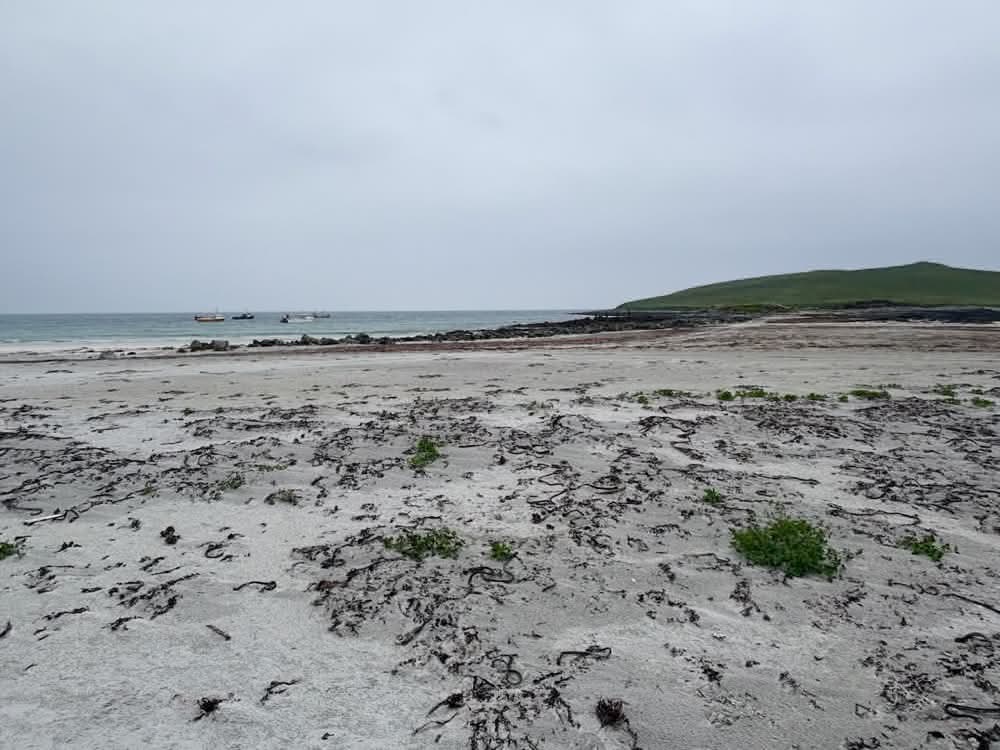
With waterproofs on, I set off along the Hebridean Way while Anna got acquainted with the car. I soon left the road and dropped onto a stunning beach — the very one where Bonnie Prince Charlie first set foot on Scottish soil. A cairn in the grass marks the spot. Impressive houses lined the cliffs above the beach, their panoramic glass fronts overlooking the bay.
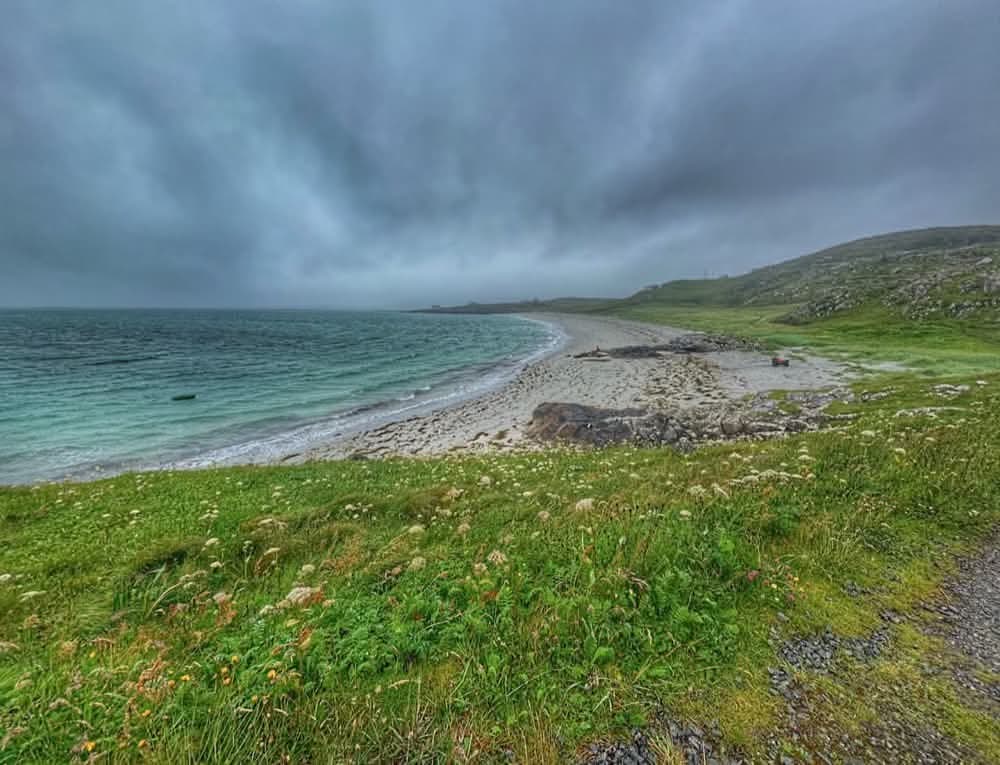
Just along the road is The Politician pub, named after the SS Politician, which famously ran aground off Eriskay in 1941 with a cargo of 264,000 bottles of whisky — a tale that inspired the novel Whisky Galore. Last time we were here, Eriskay was almost deserted. I remember the pub being alone. Now it sits in a growing village — no doubt thanks to the causeway connecting Eriskay to South Uist, which opened in 2002, just before we were last here. That explains the new houses, and those grand properties behind the beach — it would be a lovely place to live.
South Uist
I crossed the causeway onto South Uist — island number four already. I remembered windsurfing from the northern end of the causeway last time we were here. The conditions looked ideal again today.
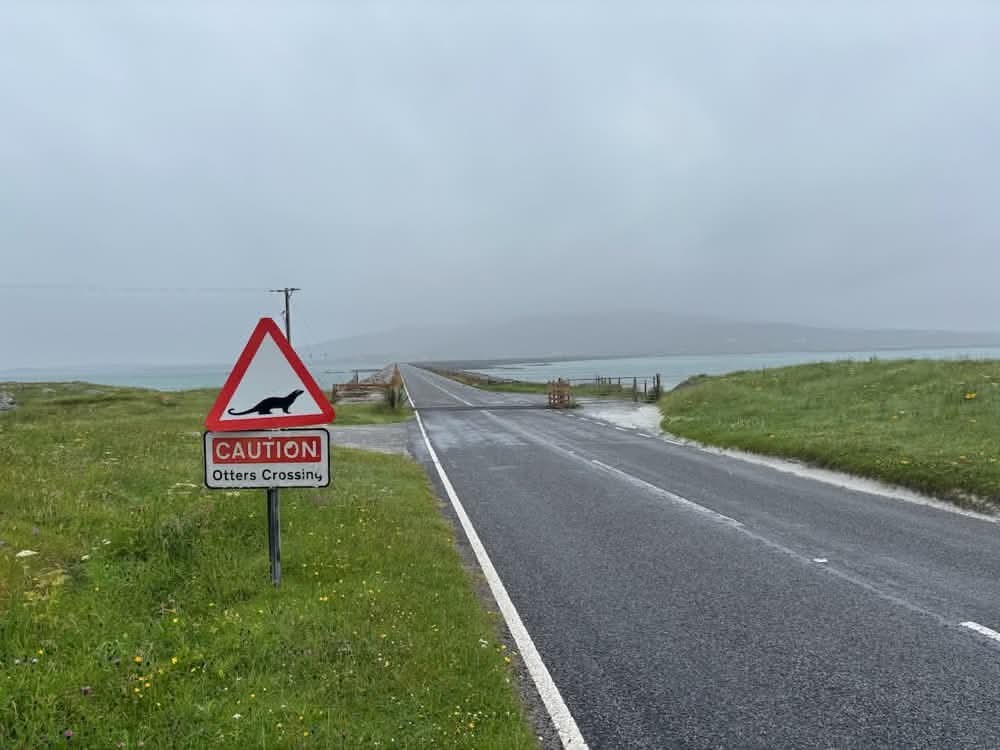
I was still following the road when I met Anna just past the small hamlet of Ludag. She drove on to the Kilbride Café, then walked back to meet me so we could walk the final stretch there together. It was the perfect lunch stop — and just as we arrived, The Germans were leaving. They’d got the boat to Eriskay the night before and had camped on the beach, surprised by the strength of the wind and rain. They’d spent the morning recovering in the café but seemed in good spirits.
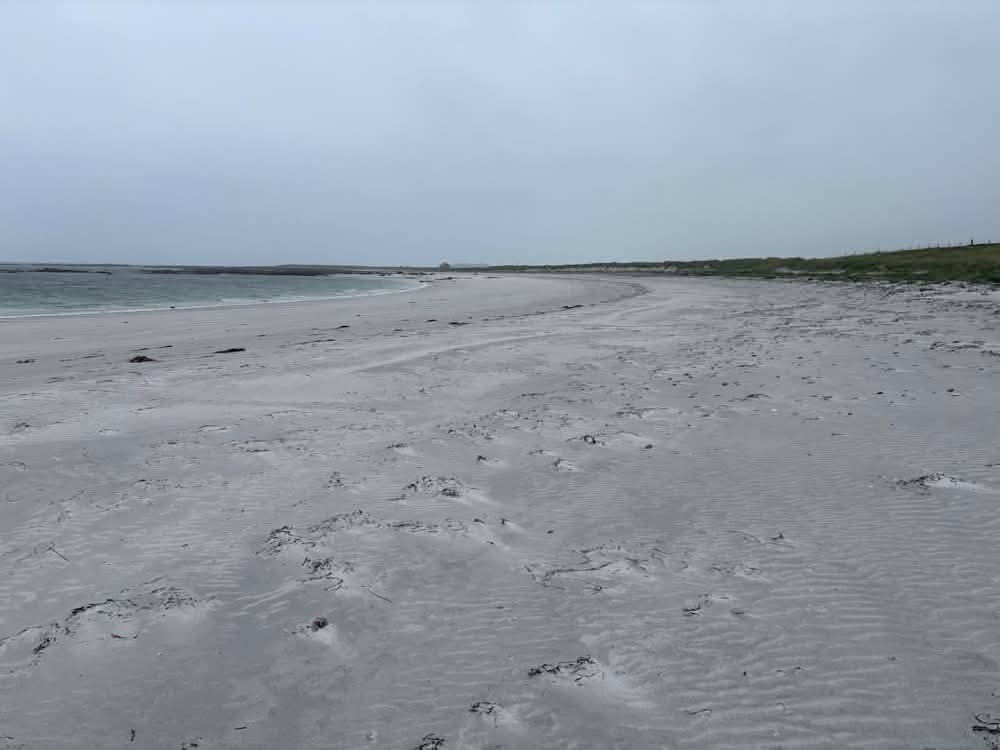
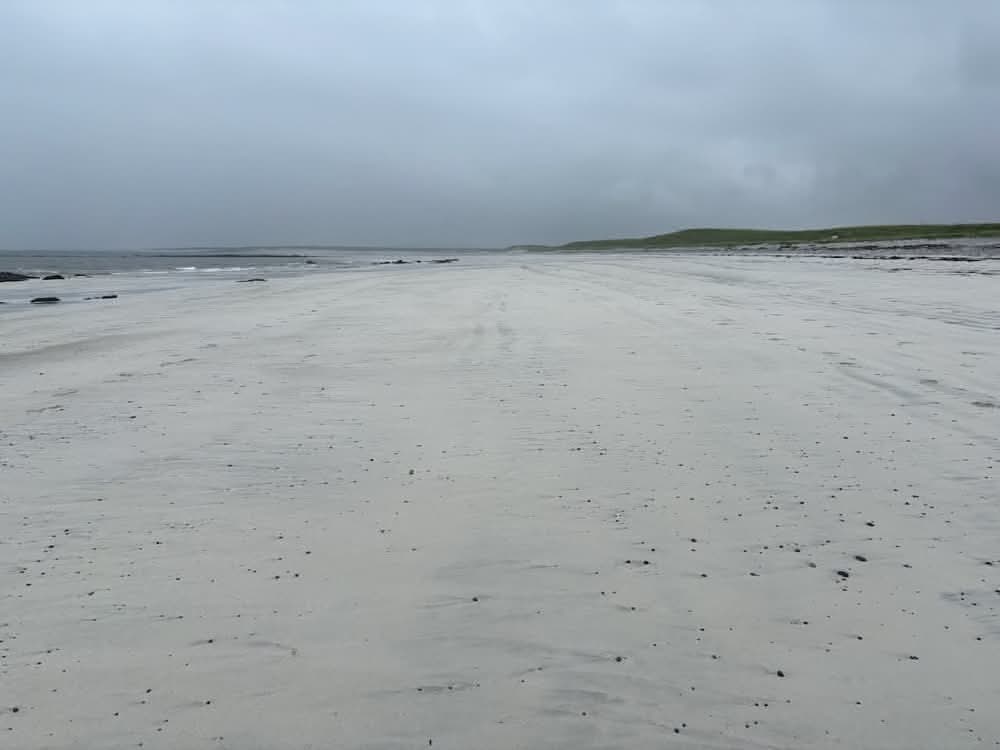
After lunch, I set off past the Polochar Inn and through the machair to the endless white beaches of South Uist. Machair — a Gaelic word for low-lying grassy plains — is one of the rarest habitats in Europe and found only on west-facing shores of Scotland and Ireland. South Uist has some of the best examples. These beaches are wild, windswept, and empty. Oystercatchers are everywhere, lapwings cry overhead, and plovers scurry across the sand.
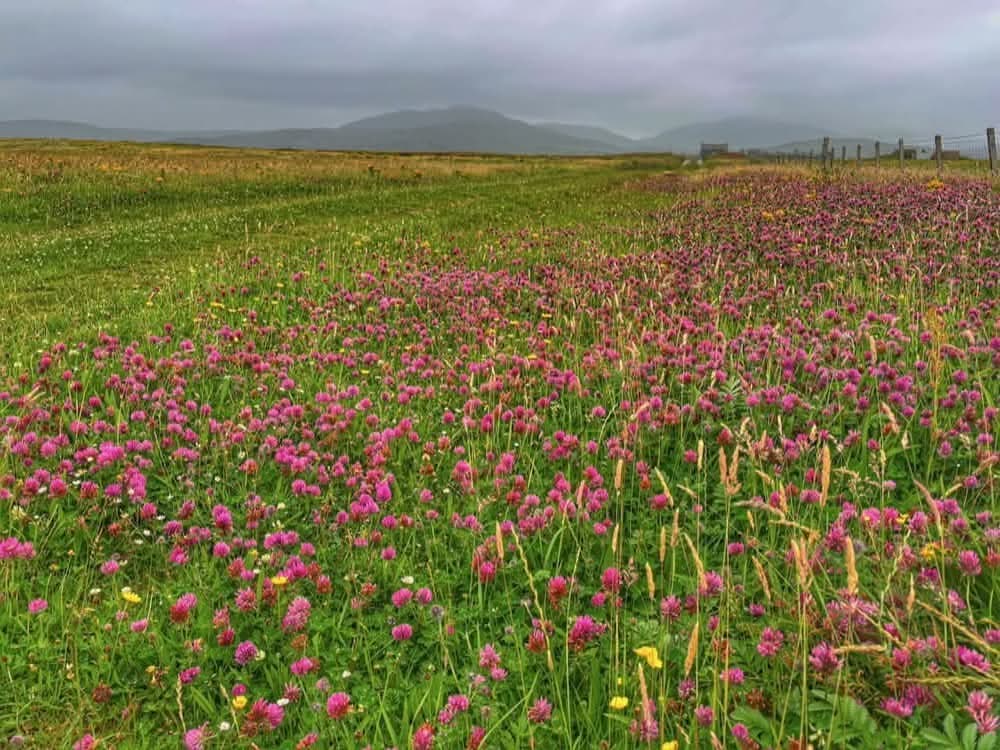
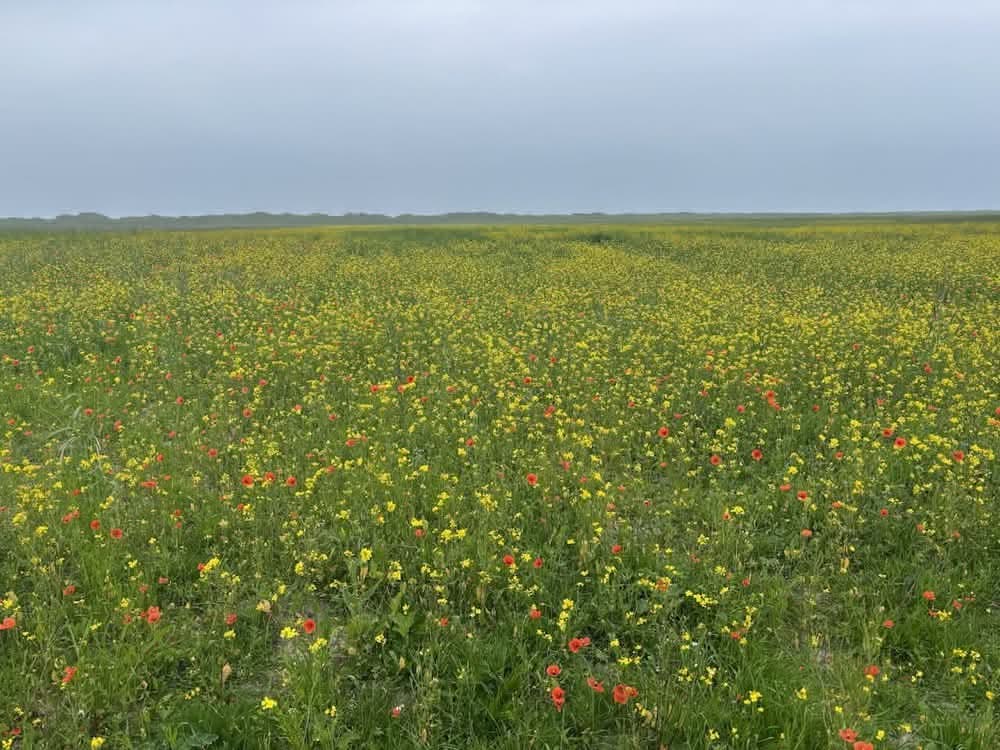
The machair itself is rich with colour — red clover, bird’s-foot trefoil, yarrow, daisies, and rarer orchids like the Hebridean spotted and marsh orchid. In wetter spots, iris beds and ragged robin flourish. Some plots are cultivated with oats and rye; others are left fallow, bright with corn marigold and field pansy. It’s beautiful — perfect walking and ideal for camping.
So I was slightly disappointed not to be camping here. Anna and I had booked a B&B for the next few nights instead.
With the tide low, I mostly walked on the beach, though I wandered through the machair now and then. I spotted The Germans ahead and passed them just after South Boisdale, where boats bobbed offshore. It was easy walking along the shore and machair for the rest of the day. I met Anna briefly at Daliburgh, where The Germans passed me again — but I soon overtook them and finished the day near Loch Eilean an Staoir.
Hebrides House
Our B&B on Benbecula turned out to be perfect — centrally located to minimise driving, with access to local amenities. The room was spacious and comfortable, with a large bed, sofa, TV (for Tour de France highlights), and ample space to sort out gear. Curiously, the gas canister was already missing — despite all our efforts!
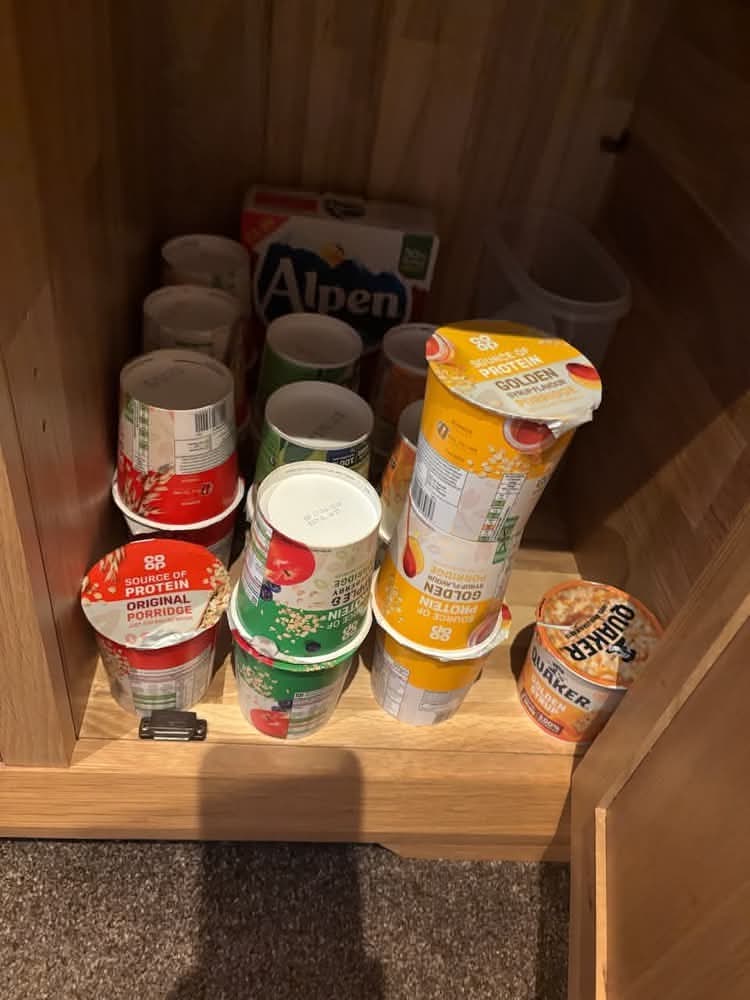
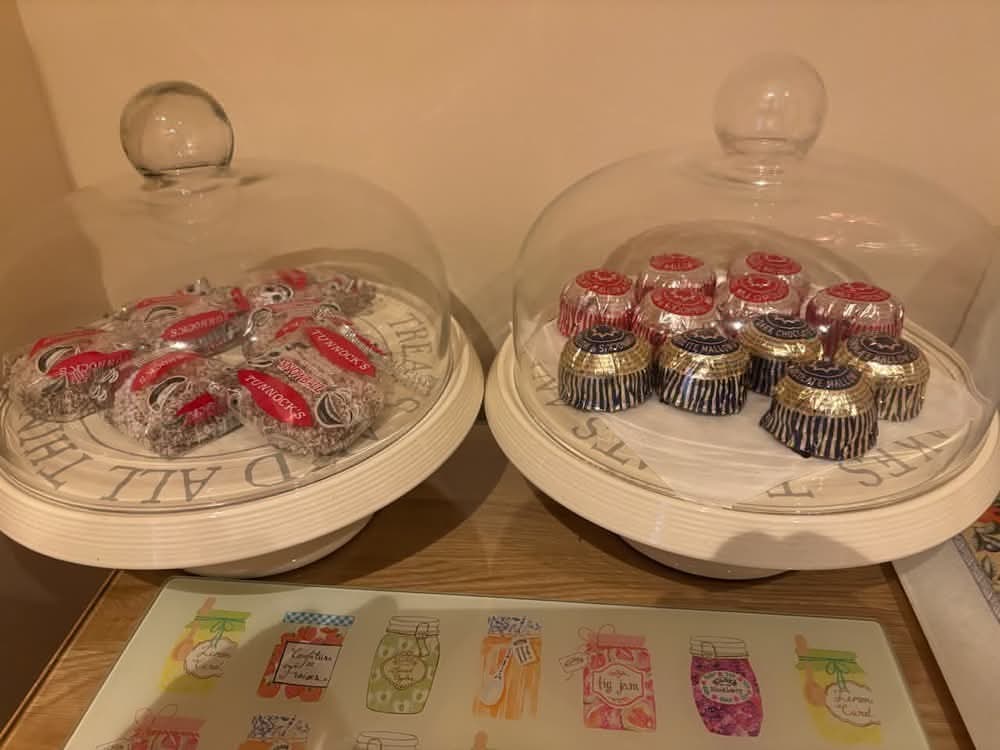
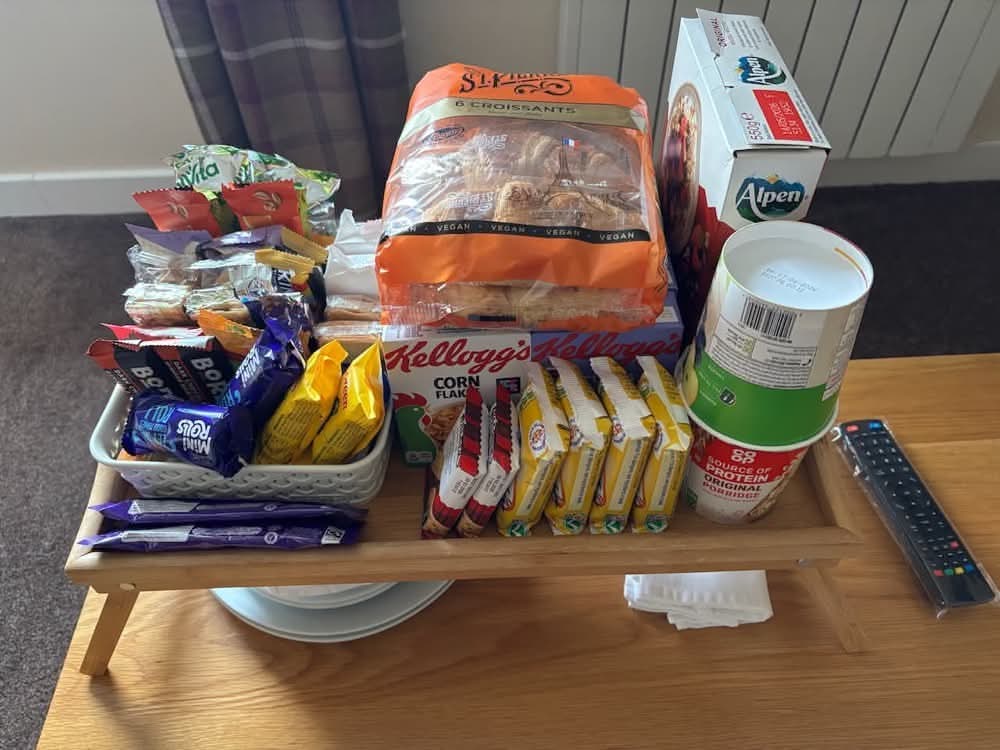
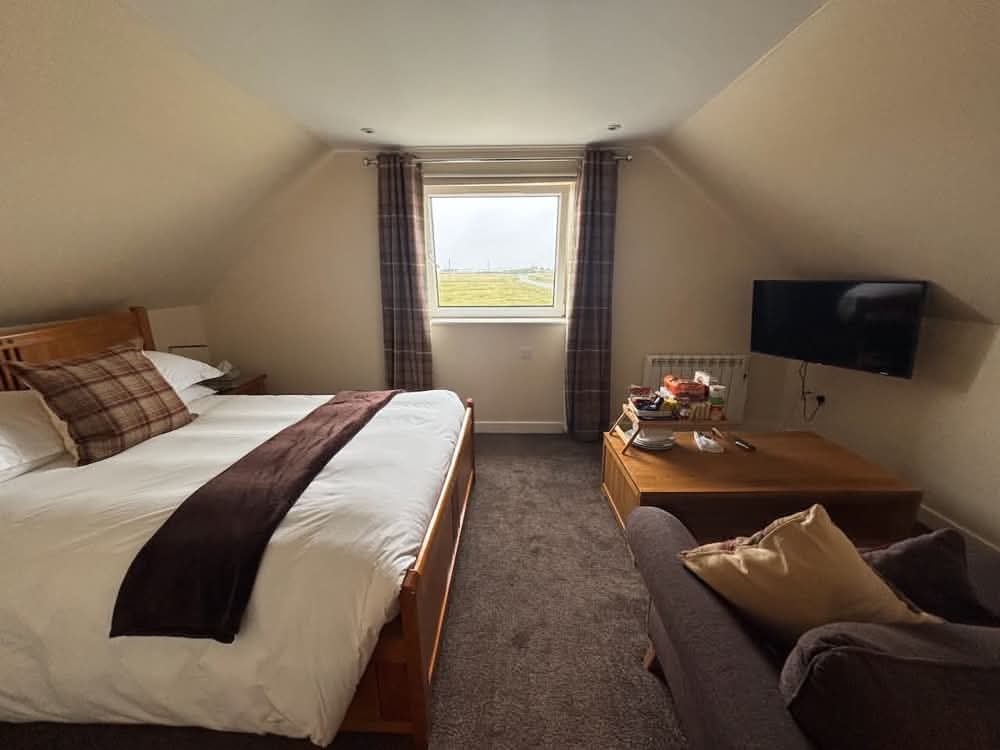
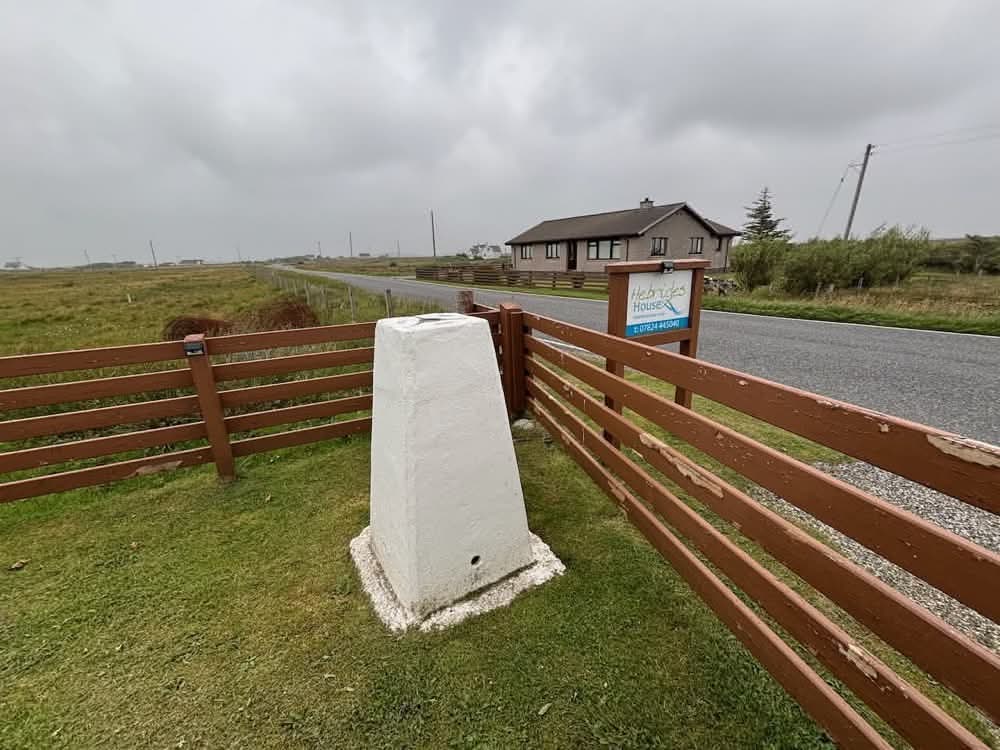
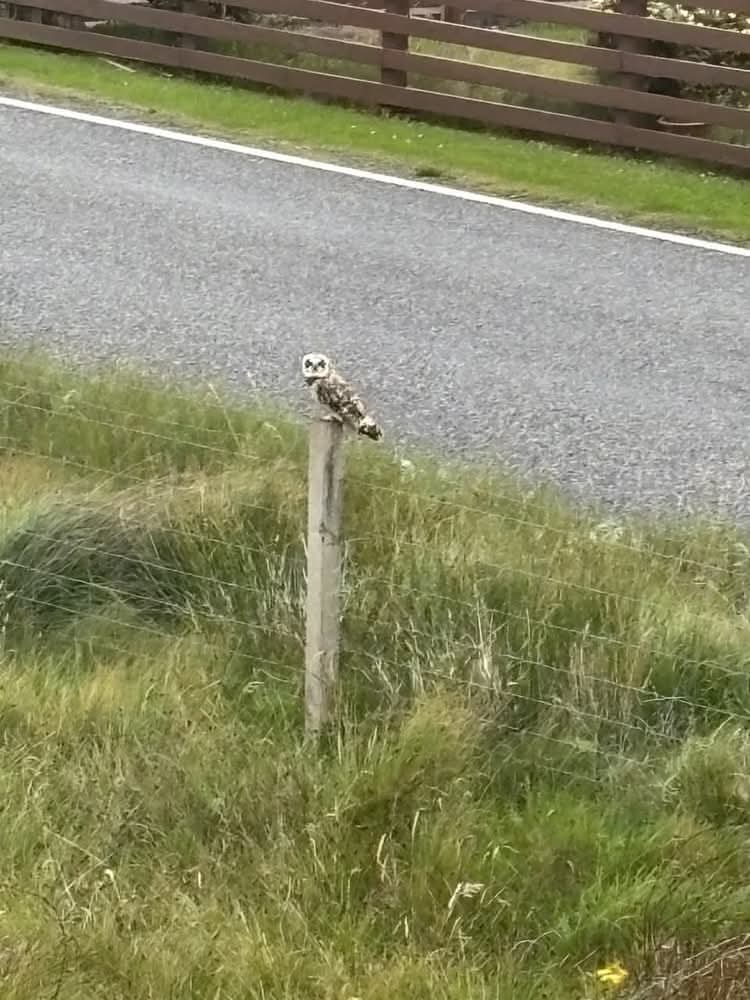
Breakfast was even better — with not only what was on the table in the room, but fridge supplies, snacks for the day, and a microwave outside the door. The window offered views across northern Benbecula to Rueval, which I’d climb in a few days. There was even a trig point in the garden. Oystercatchers fed on the grass, rabbits scampered about, and a short-eared owl perched on fence posts. Even the cows that escaped into the road caused only mild, Hebridean-style havoc — they were gently returned to their field with little fuss.
Towards Benbecula
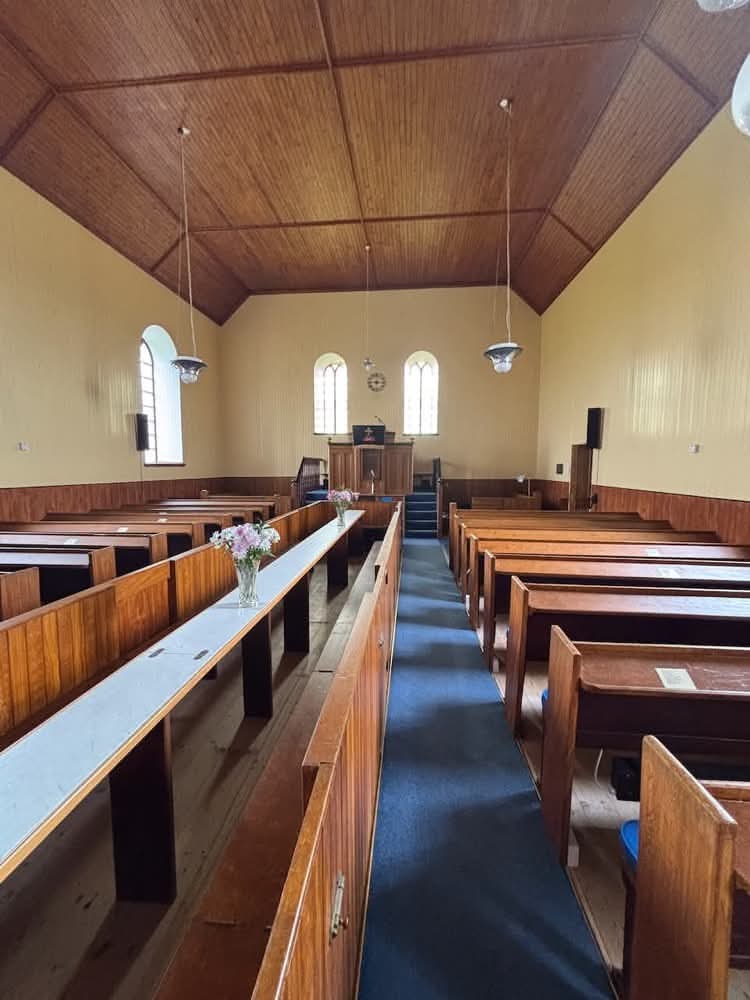
The next day brought more walking through the beautiful machair of South Uist. Anna dropped me off where I’d stopped the previous day. It was drizzling, but not heavily. I passed lochs full of swans and geese, saw a couple of men fishing from a rowing boat, and eventually reached the beach again to meet Anna for lunch at Howmore. We walked to the church, refilled water, and ate our lunch on a bench. The Germans (now identified by Anna as Stephanie and Christian) had just passed through.
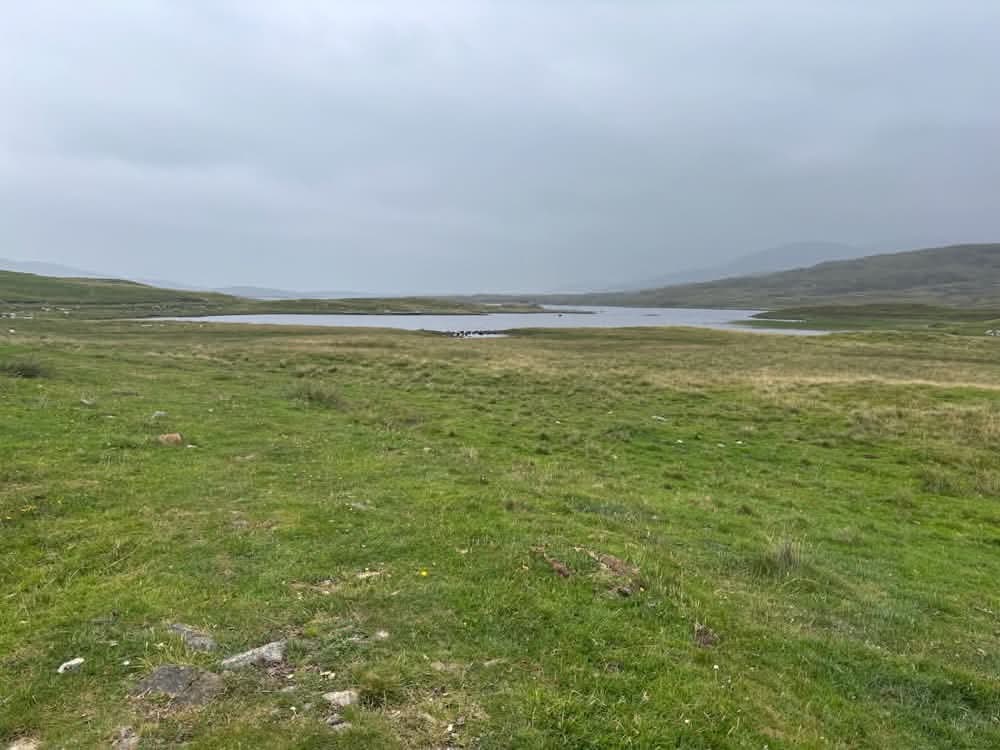
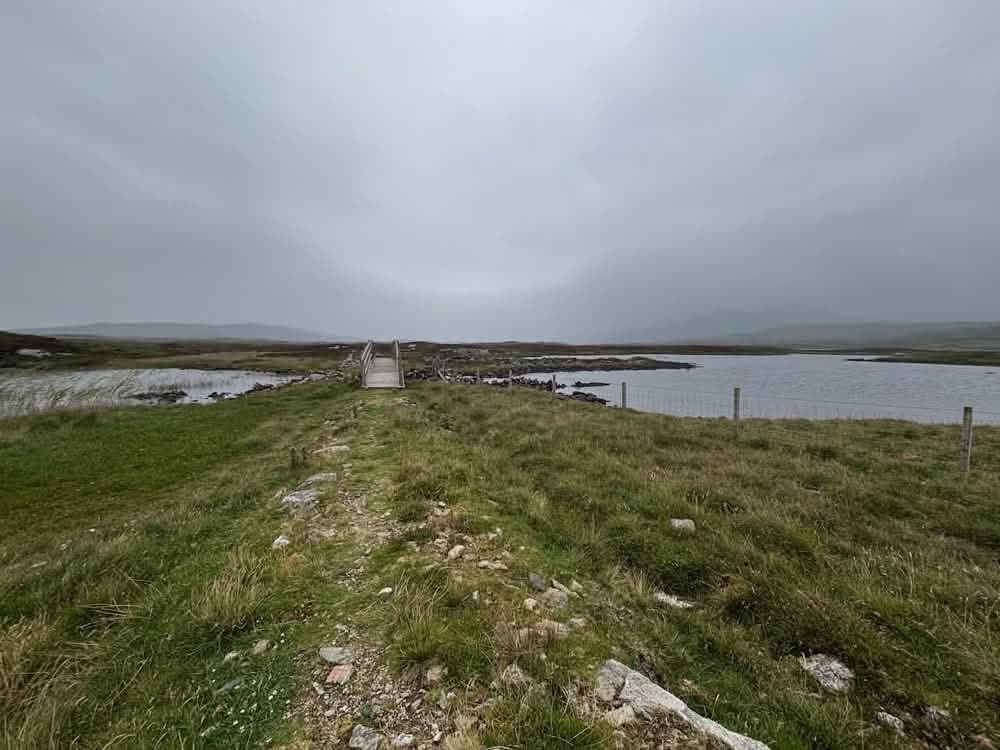
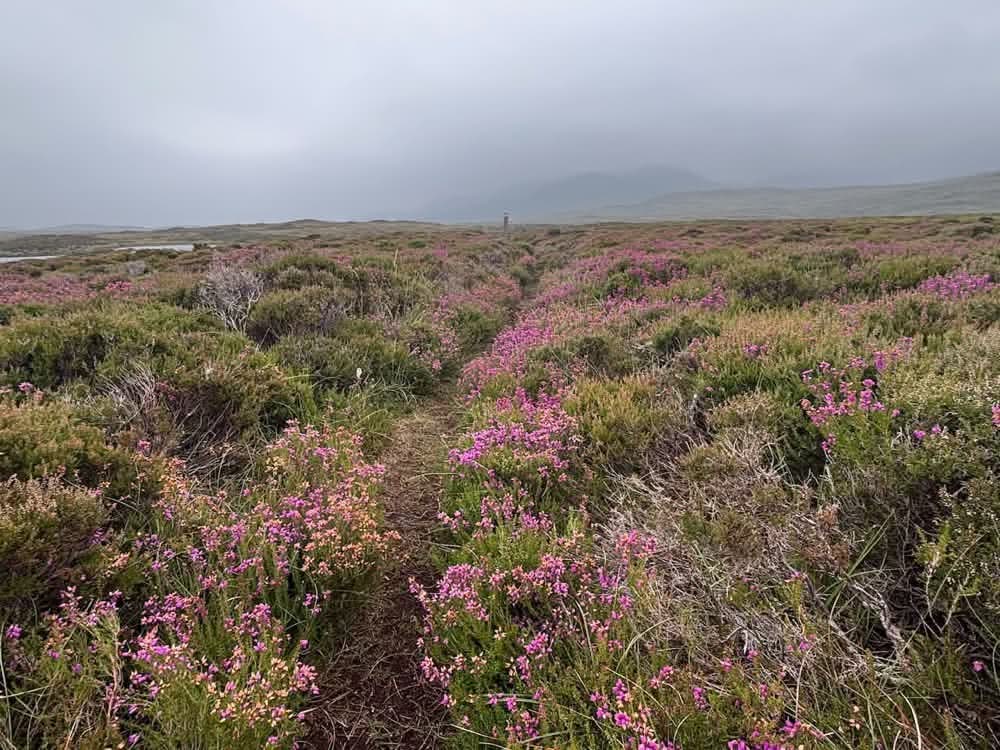
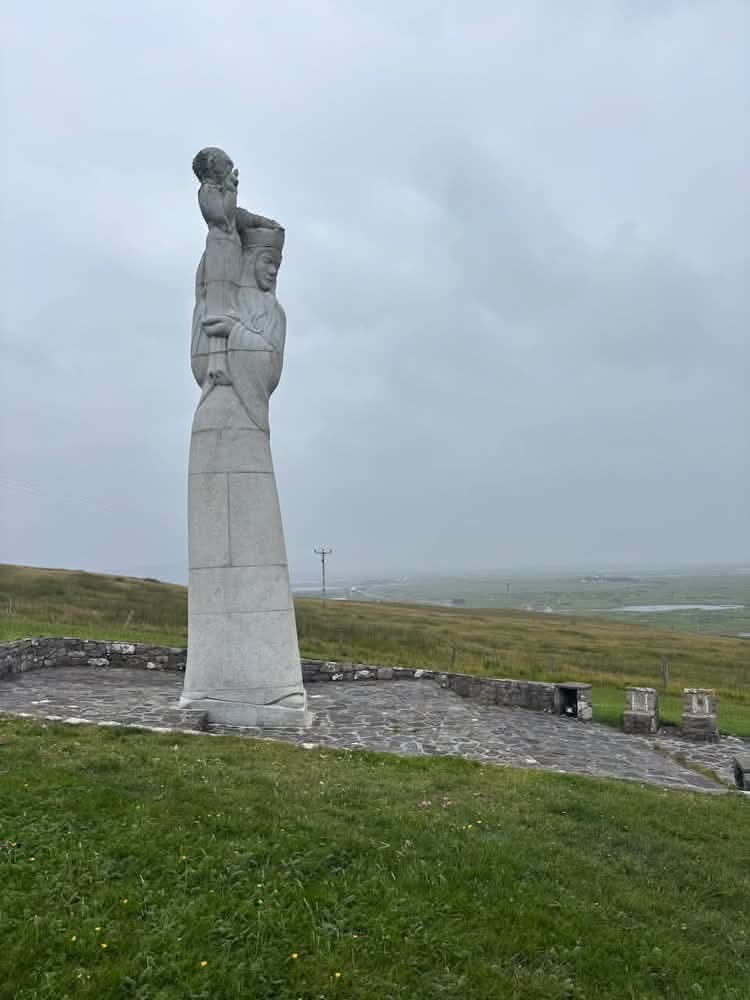
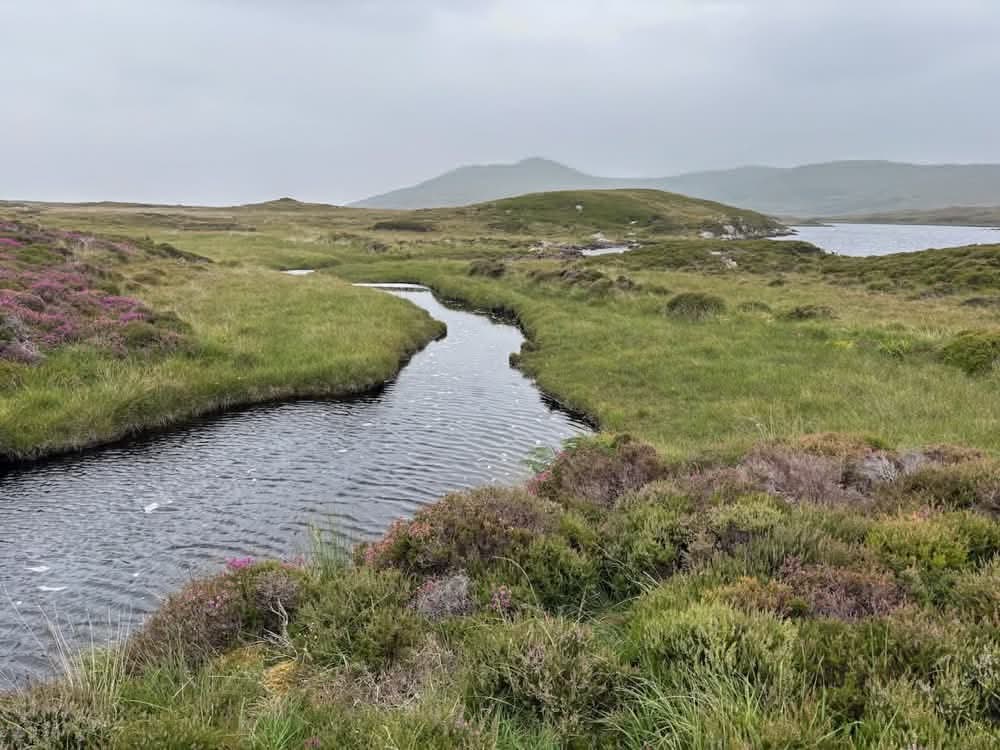
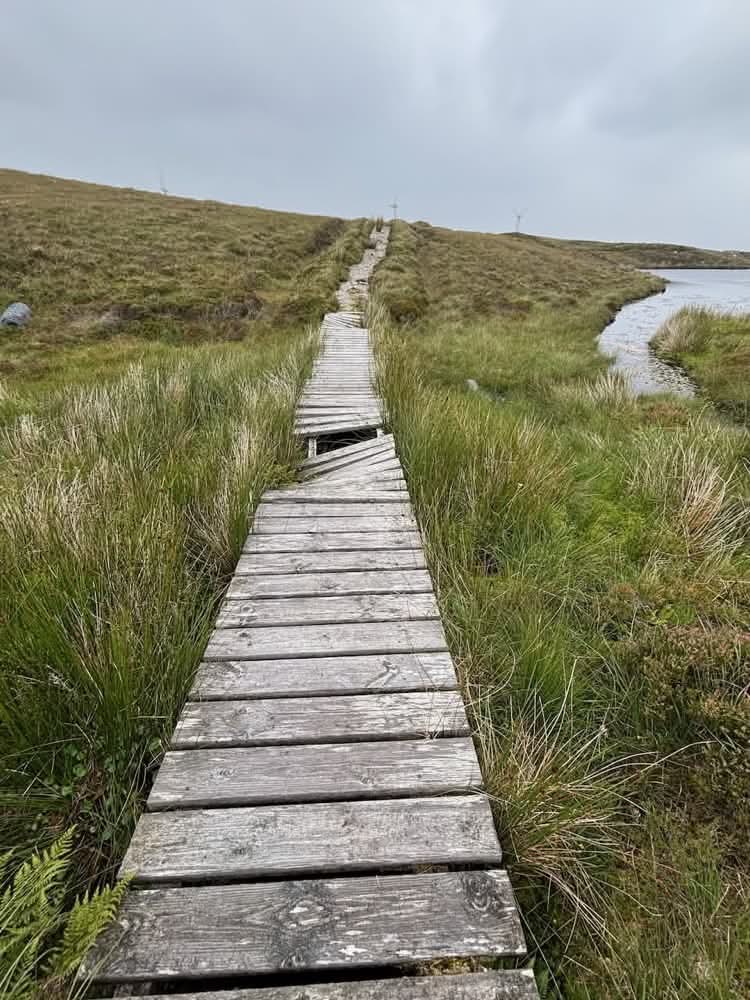
After lunch, the trail turned inland across the road and into the RSPB reserve at Loch Druidibeg — a peaceful area of lochs, bog, and winding trails with mountain backdrops. The path skirted narrow inlets, sometimes getting boggy underfoot. Eventually, I crossed a footbridge and continued through more boggy wilderness to finally emerage out onto the road. A couple of people stopped to ask if I wanted a lift – I declined saying that it would be cheating. I climbed up to Our Lady of the Isles, a large statue symbolising local resistance to the proposed missile testing range. From there, I dropped to a layby where Anna was waiting.
I had planned to stop here, but it was still early, and Stephanie and Christian were about 20 minutes ahead. The next stretch was only five miles. I felt good — so I decided to press on, aiming to catch them and get closer to Benbecula. I broke into a steady jog in hot pursuit.
I soon found them resting, shoes off, in a grassy hollow. I stopped for a biscuit and a chat. That would be the last time we saw them — I pulled ahead that afternoon and started earlier each morning after that. I often wonder how they got on.
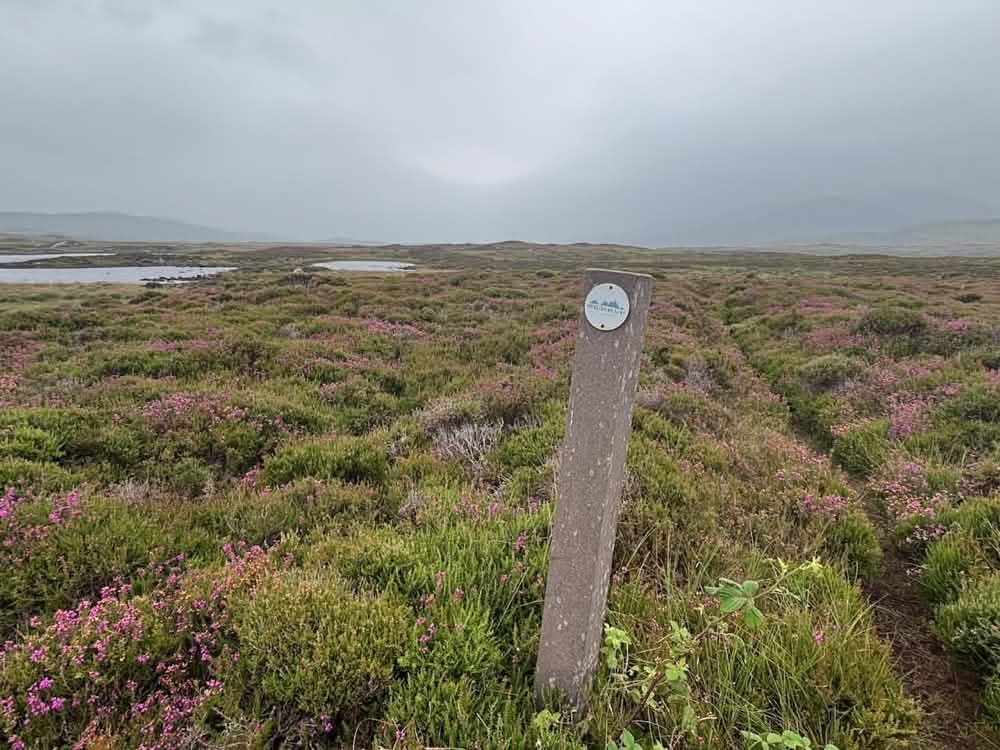
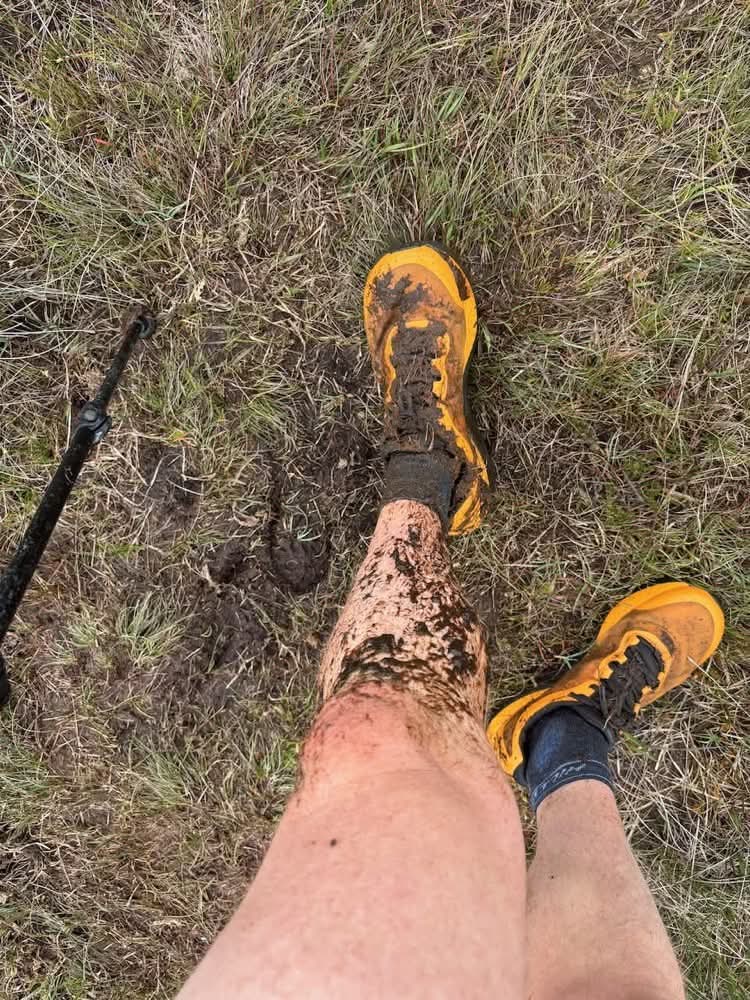
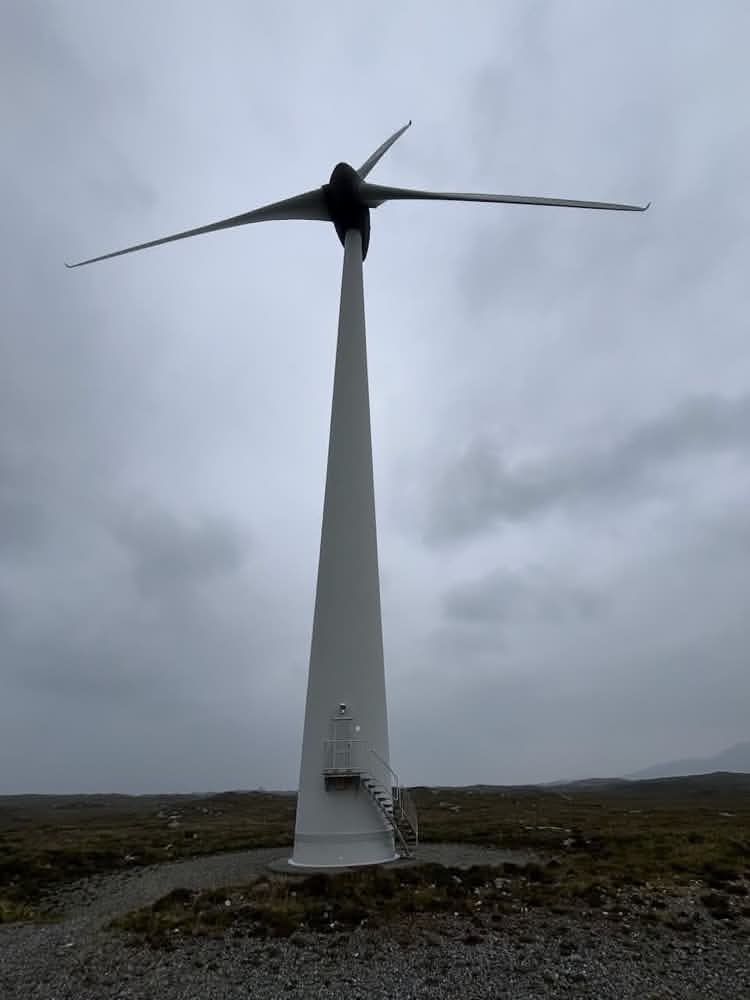
The trail turned boggy again as it followed the edge of Loch Bee, a favourite old windsurf spot of mine. Loch Bee is one of the largest lochs in the Hebrides and is brackish due to a mix of sea and freshwater. It’s rich in birdlife, especially whooper swans, and is designated as an SSSI (Site of Special Scientific Interest). Here, water dominates land — and wayfinding becomes tricky. Fortunately, there were plenty of marker posts, but I still found myself knee-deep in bog now and then. Eventually, I reached a service track under three large wind turbines, these are part of the Locharnan community-owned wind farm, a symbol of local sustainability and community resilience. Community energy projects like this are increasingly common in the Outer Hebrides, where wind resources are abundant. Anna met me again along this track and we walked the final mile back to the car together.
That was most of South Uist done. The next day would start with a final mile here before crossing to Benbecula, island number five. We stopped at a country store to replace the missing gas canister and drove onto Grimsay to bag another island. Dinner was a quick stop at the Dark Island Hotel.
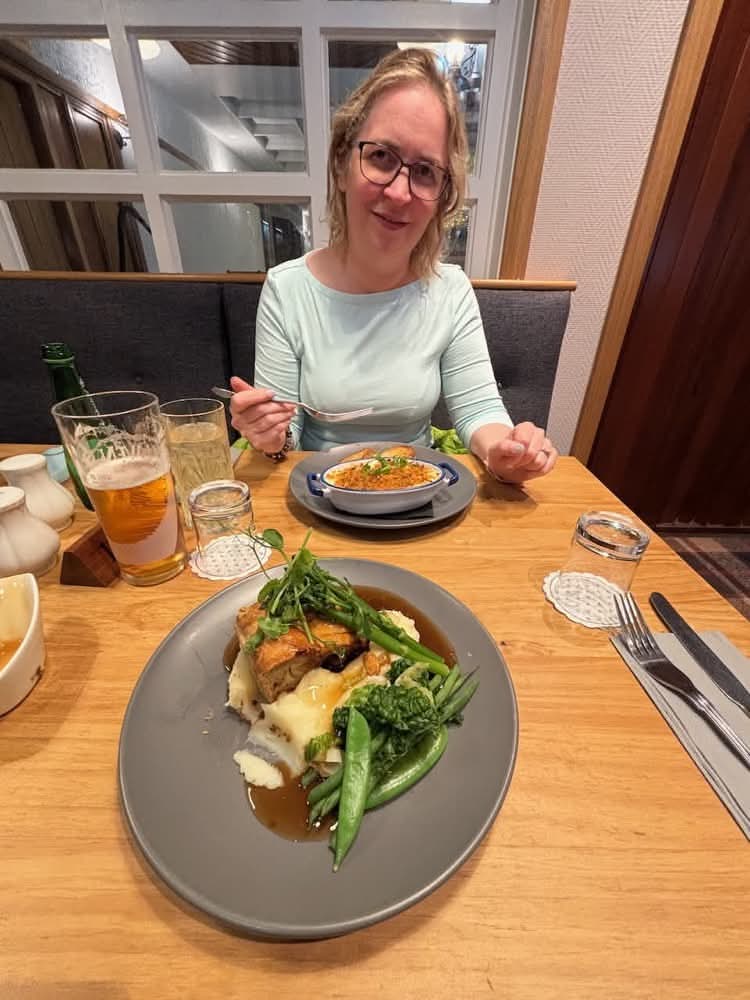
South Uist had been just as lovely as we remembered — definitely one of our favourites in the Outer Hebrides, even if the weather had been a little grey.
Discover more from A Simple Life of Luxury
Subscribe to get the latest posts sent to your email.









Hmm I beginning to feel that you’d love to live there…..although you have always said that